
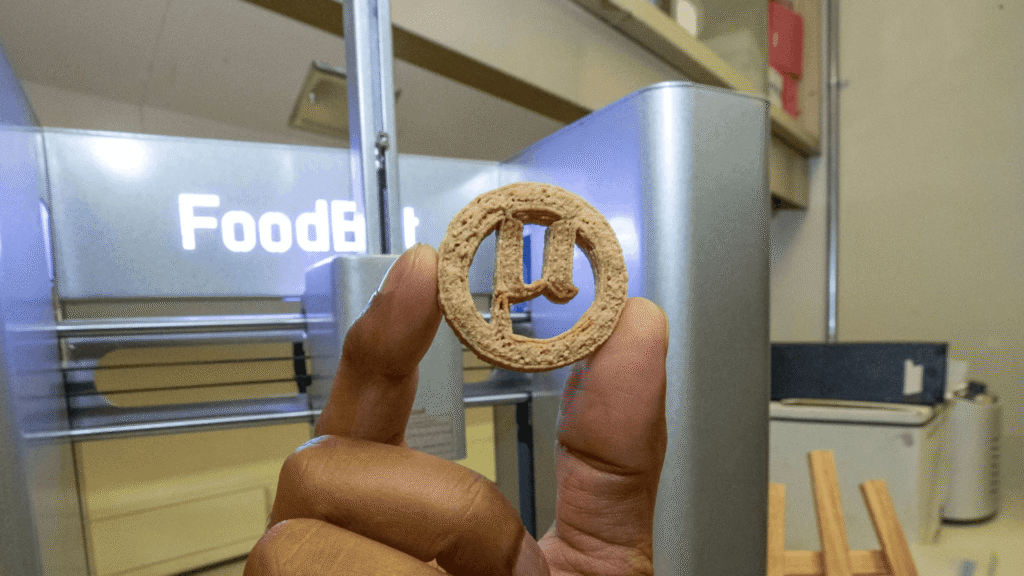
What if discarded plastic bottles could one day become part of a meal? Scientists are exploring that unusual possibility by developing engineered yeast that can transform plastic waste and agricultural leftovers into ingredients for edible cookies.
The experimental food technology, developed with support from NASA’s Deep Space Food Challenge, could offer a new approach to tackling two major global challenges: plastic pollution and food shortages.
From Plastic Bottles to Food Ingredients
Researchers at Southern Illinois University Carbondale have been studying ways to convert polyethylene terephthalate, commonly known as PET plastic, into useful materials.
PET is widely used in water and soft drink bottles. Instead of allowing the carbon-rich material to remain waste, scientists are breaking it down into smaller compounds that microorganisms can process.
The team believes these compounds can eventually be transformed into food-related ingredients.
Engineered Yeast Acts Like a Tiny Food Factory
The key to the process is specially engineered yeast. Scientists have modified different yeast strains to consume molecules obtained from plastic and agricultural waste.
The microorganisms can then produce proteins, fats, vitamins and flavouring compounds.
This approach uses biology rather than relying entirely on traditional chemical manufacturing. Researchers say microbes are naturally capable of performing complex transformations, making them useful tools for converting waste into valuable products.
How the Experimental Cookies Are Made
The process begins by treating PET plastic, corn stalks, leaves and other plant-based waste using a high-temperature and high-pressure method.
This treatment breaks down resistant materials into smaller molecules that yeast can use.
The engineered microorganisms convert those molecules into food components. These ingredients are then combined with fibre, starch and sweeteners before being shaped into small cookies using a 3D printer.
The experimental products are called µBites, pronounced “microbites.”
Could These Cookies Be Safe to Eat?
Researchers have reported that the available data indicate the cookies are safe to eat. However, formal taste testing has not yet taken place because institutional approval is still pending.
Participants have so far evaluated the aroma of the products, and many indicated they would be willing to eat them in situations where food supplies were limited.
The scientists are also working to improve the flavour and appearance of the cookies to make them more appealing to everyday consumers.
A Food Solution for Space Travel
The technology was originally connected to NASA’s efforts to develop food systems for deep-space missions.
Astronauts travelling to the Moon or Mars cannot depend on frequent food deliveries from Earth. Producing food using locally available resources could become essential for long-duration missions.
A compact system that converts waste into proteins, vitamins and other nutrients could help reduce the amount of food that must be transported into space.
The same technology may also have applications in submarines, disaster zones and remote locations where food supplies are difficult to deliver.
Beyond Space: A Possible Answer to Food Shortages
The researchers believe the idea could eventually become relevant on Earth as well. Global food demand is expected to increase significantly in the coming decades, putting additional pressure on agricultural resources.
Turning waste into food ingredients could offer an alternative way to produce nutrition without depending entirely on conventional farming.
However, the technology is still in its experimental stage, and several challenges remain before such products could become widely available.
The Future of Sustainable Food
The development of plastic-derived food ingredients may sound futuristic, but it reflects a growing scientific interest in using biotechnology to solve environmental and food-related problems simultaneously.
If researchers can make the process efficient, affordable and acceptable to consumers, waste-based food production could become part of a broader strategy for sustainable living.
For now, the idea of eating a cookie made partly from recycled plastic remains unusual. But in the future, it could represent an important step toward producing food in some of the most resource-limited environments imaginable.