
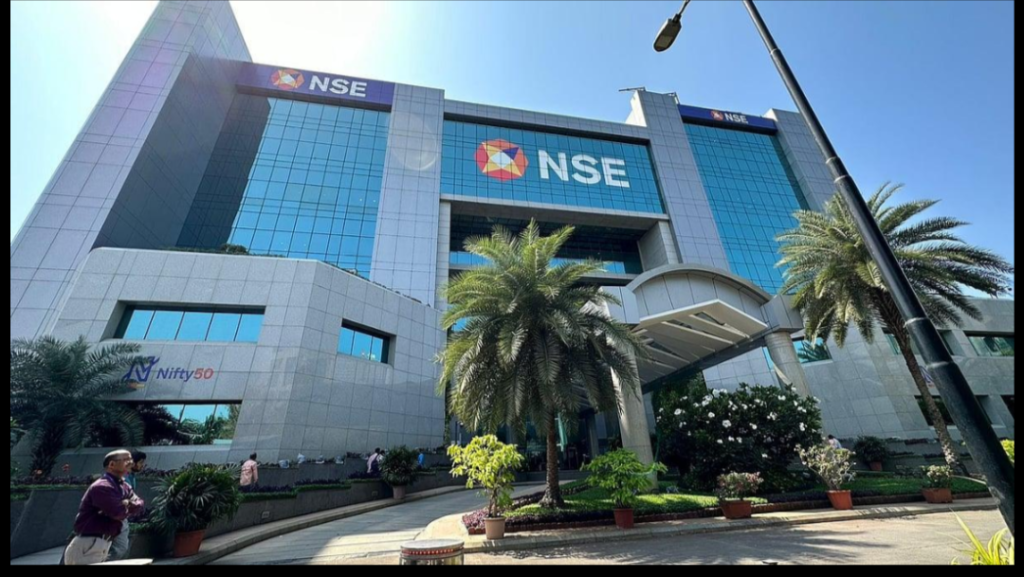
The National Stock Exchange of India (NSE), the country’s largest stock exchange by trading volume, is set to make its historic market debut on Thursday, September 24, 2026. Shares of National Stock Exchange of India Limited will list and begin trading on the BSE.
Issue Size: Approximately ₹22,562 crore (₹225.62 billion), making it the second-largest IPO in India’s history after Hyundai Motor India’s 2024 offering.
Issue Type: Entirely an Offer for Sale (OFS) of about 12.64 crore equity shares by existing shareholders. NSE itself is not raising fresh capital.
Price Band: ₹1,700–₹1,785 per share. The final issue price was fixed at the upper end of ₹1,785.
Lot Size: 8 shares (minimum investment ≈ ₹14,280 at the upper band).
Subscription: The IPO was subscribed 5.71 times overall. Qualified Institutional Buyers (QIBs) led demand at 12.68 times, Non-Institutional Investors (NIIs) at 6.55 times, and Retail Individual Investors at 1.39 times.
Valuation: At ₹1,785, the implied market capitalisation is around ₹4.4–4.42 lakh crore (≈ $46 billion), placing NSE among the world’s most valuable exchange operators.
Allotment: Finalised on September 22, 2026. Shares were credited to successful applicants’ demat accounts on September 23.
Trading is expected to begin around 10:00 AM IST under a Special Pre-open Session (SPOS). Grey market premium (GMP) on the eve of listing hovered around ₹43–₹47, suggesting a modest premium of about 2.4–2.6% over the issue price (indicative listing range near ₹1,828–₹1,832). GMP figures are unofficial and can change quickly.
The scrip will trade under the symbol NSE (Scrip Code 544937 on BSE) with ISIN INE721I01024. It has been admitted to the ‘A’ Group of securities.
The listing marks a major milestone for India’s financial markets. As the operator of the country’s dominant equity, derivatives, and debt platforms, NSE’s public listing increases transparency and allows a broader set of investors to own a stake in the exchange that powers a large share of India’s capital markets activity. Proceeds from the OFS go to selling shareholders rather than the exchange.
Investors and market participants will closely watch opening price discovery, trading volumes, and subsequent performance as NSE transitions from a closely held entity to a publicly listed company