
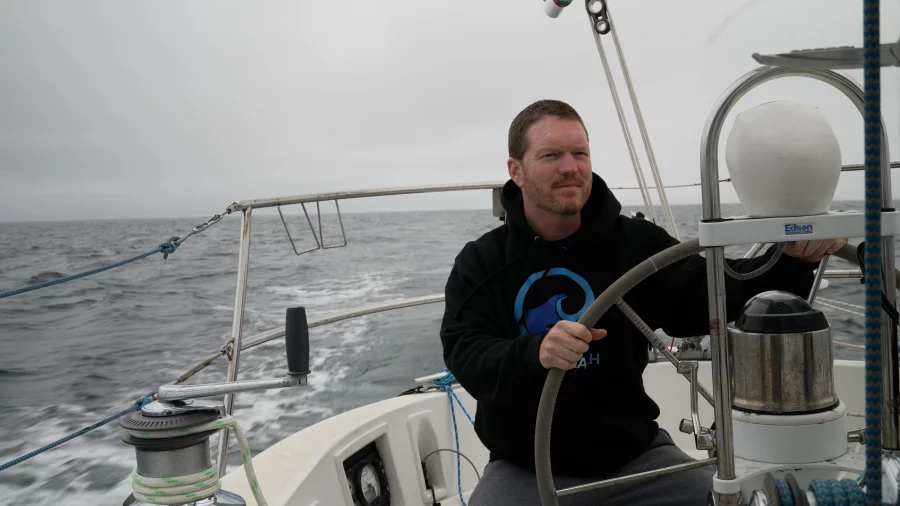
Few journeys demand as much endurance as sailing through the Arctic. For American sailor Matt Rutherford, the challenge became a remarkable 10,000-mile odyssey around the Arctic Ocean.
The expedition combined isolation, unpredictable weather and difficult navigation, turning an ambitious sailing plan into a test of endurance and determination.
A Journey Through One of Earth’s Harshest Regions
The Arctic is among the most challenging environments for any expedition. Freezing temperatures, shifting sea ice and rapidly changing weather can make navigation extremely difficult.
For Rutherford, travelling through this remote region meant spending long periods far from conventional support and dealing with conditions that can change quickly.
The scale of the journey also meant that preparation and patience were just as important as sailing ability.
Why Circumnavigating the Arctic Is So Difficult
Unlike a conventional ocean voyage, an Arctic expedition involves navigating around ice and constantly assessing whether particular routes remain passable.
Sea ice can shift with weather and ocean conditions, forcing sailors to change plans. Visibility can also become a major concern, while the extreme cold adds another layer of difficulty.
Every stage of the expedition therefore requires careful decisions rather than simply following a predetermined route.
A Test of Endurance
Long-distance solo sailing is physically and mentally demanding even in more familiar waters. In the Arctic, the pressure is intensified by isolation and the environment.
Rutherford’s journey required sustained concentration and the ability to cope with uncertainty for extended periods.
The expedition demonstrates why major adventure journeys are often as much about mental resilience as physical strength.
More Than Just a Record-Style Adventure
The significance of such a voyage extends beyond the achievement of covering thousands of miles.
Travelling through remote Arctic waters provides a firsthand perspective on one of the planet’s most rapidly changing regions. The Arctic is closely watched by scientists because changes in sea ice, temperature and ecosystems have consequences far beyond the polar region.
An expedition through these waters therefore also connects adventure with a broader interest in the future of the Arctic.
The Human Side of an Extreme Journey
What makes Rutherford’s story particularly compelling is the human challenge behind the numbers.
Ten thousand miles can sound like an abstract figure, but behind it are long days at sea, difficult decisions, isolation and the constant need to adapt.
Such journeys demonstrate how exploration continues to challenge people even in an age when satellites and digital navigation have transformed travel.
An Adventure Built on Persistence
Rutherford’s Arctic voyage is ultimately a story about persistence. Crossing one of the world’s most demanding maritime environments requires preparation, courage and the ability to continue when conditions become difficult.
His 10,000-mile journey shows that some of the world’s greatest adventures are not necessarily about reaching the fastest route or the most famous destination. Sometimes, the achievement lies simply in continuing the journey through an environment that refuses to make things easy.