
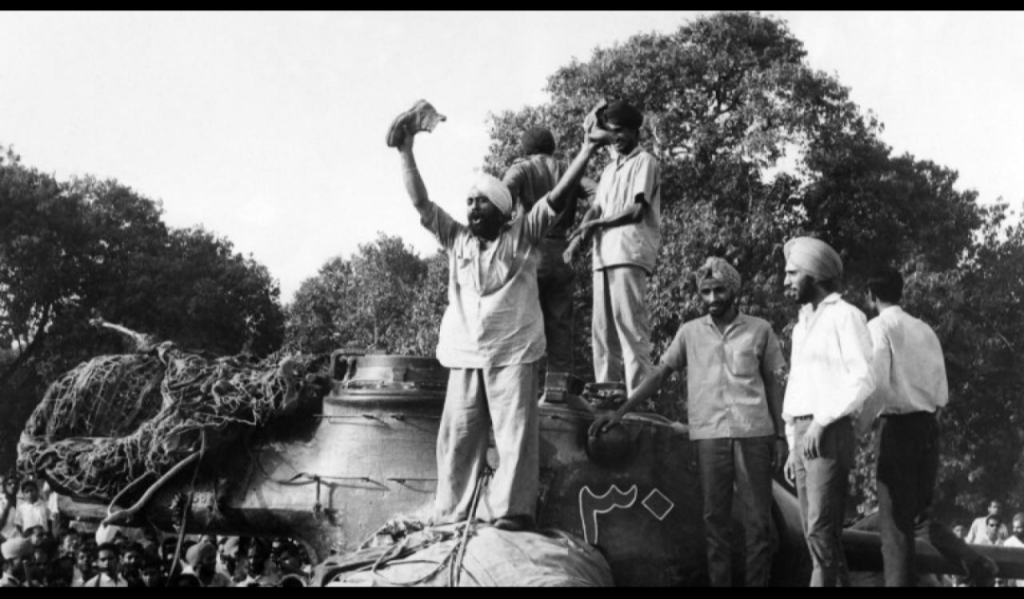
On September 23, 1965, the second major war between India and Pakistan came to an end when a United Nations-mandated ceasefire took effect. The 17-day conflict, which began in early August and intensified in September, concluded after both countries accepted United Nations Security Council Resolution 211.
Background of the 1965 War
The war was triggered by Pakistan’s Operation Gibraltar in early August 1965, in which infiltrators were sent into Indian-administered Jammu and Kashmir in an attempt to spark an insurgency. This was followed by Operation Grand Slam on September 1, a major Pakistani offensive in the Chhamb sector.
India responded by opening new fronts, launching offensives across the international border in Punjab and Rajasthan, including thrusts towards Lahore and Sialkot. The conflict featured intense fighting on land, in the air, and limited naval action. One of the largest tank battles since World War II, the Battle of Asal Uttar (September 8–10), saw Indian forces inflict heavy losses on Pakistani armour.
By mid-September, the war had reached a stalemate. Both sides had captured territory, but neither could achieve a decisive breakthrough. International pressure, particularly from the United Nations, the United States and the United Kingdom (which cut off arms supplies to both countries), mounted for an end to hostilities.
The Path to Ceasefire
On September 20, 1965, the UN Security Council unanimously adopted Resolution 211, demanding an immediate ceasefire and the withdrawal of all armed personnel to the positions held before August 5, 1965. It also called for subsequent negotiations on the Kashmir issue.
India accepted the ceasefire proposal on September 21. Pakistan conveyed its acceptance on September 22. The ceasefire formally came into force in the early hours of September 23, 1965 (around 3:00–3:30 a.m. IST).
Prime Minister Lal Bahadur Shastri addressed the nation, noting that hostilities which had begun with the infiltration on August 5 had come to an end. He cautioned that the ceasefire should not be mistaken for lasting peace and stressed the need for vigilance
Aftermath and Tashkent Declaration
Although the fighting stopped, the underlying dispute over Kashmir remained unresolved. Soviet Premier Alexei Kosygin mediated talks between Indian Prime Minister Lal Bahadur Shastri and Pakistani President Ayub Khan in Tashkent (then in the Uzbek SSR).
On January 10, 1966, the two leaders signed the Tashkent Declaration. Both sides agreed to withdraw to pre-war positions (as of August 5, 1965) and to restore diplomatic and economic relations. Tragically, Prime Minister Shastri passed away in Tashkent hours after signing the agreement.
The 1965 war demonstrated India’s military resilience after the 1962 conflict with China and reinforced the importance of international diplomacy in containing bilateral conflicts. While the ceasefire of September 23 ended active hostilities, it did not resolve the core political issues, which continued to shape India-Pakistan relations in the decades that followed.
September 23 remains a significant date in the military and diplomatic history of the subcontinent — the day the guns of 1965 fell silent under a UN-mandated ceasefire.