
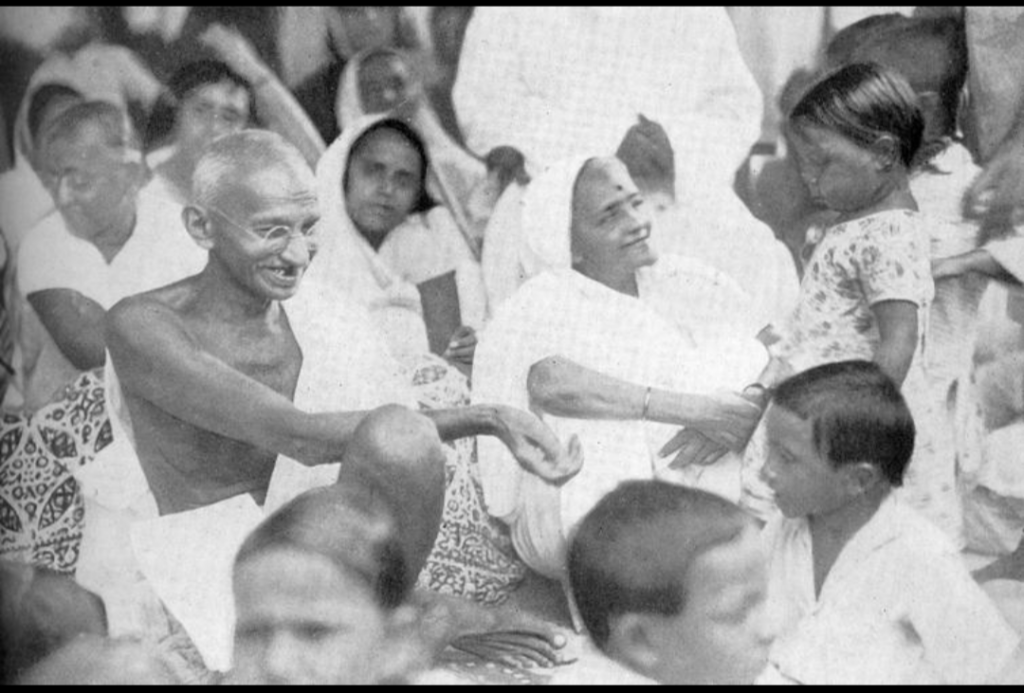
The League was later renamed the Harijan Sevak Sangh (Servants of Harijans Society). It was established in the immediate aftermath of the historic Poona Pact (signed on 24 September 1932) between Gandhi and Dr B.R. Ambedkar.
In August 1932, the British government announced the Communal Award, which provided for separate electorates for the Depressed Classes (then referred to as untouchables). Gandhi, who was imprisoned in Yerwada Jail, Pune, opposed the measure, viewing it as a threat to Hindu unity. He began an indefinite fast unto death on 20 September 1932.
Following intense negotiations, the Poona Pact was signed on 24 September 1932. Under the agreement, separate electorates were replaced with reserved seats for the Depressed Classes within the general electorate. Gandhi broke his fast shortly afterwards.
Six days later, on 30 September 1932, the All India Anti-Untouchability League was formed. Industrialist Ghanshyam Das Birla became its founding president, and Amritlal V. Thakkar (Thakkar Bapa) served as secretary. Gandhi himself provided the guiding inspiration while still in jail.
Eradicating untouchability through peaceful and non-violent means.
Opening public wells, roads, schools, temples, dharamshalas and cremation grounds (burning ghats) to people facing untouchability.
Promoting the social, educational and economic upliftment of those then called Harijans (a term Gandhi popularised, meaning “Children of God”).
Working for absolute equality of status within Hindu society.
The League was later renamed Harijan Sevak Sangh. It established branches across India and undertook constructive programmes such as running schools, promoting inter-dining and supporting access to public facilities.
The organisation continues to function today with its headquarters at Gandhi Ashram, Kingsway Camp, Delhi, and branches in multiple states.
This event marked an important milestone in Gandhi’s lifelong campaign against the practice of untouchability and remains a significant chapter in India’s social reform history.