
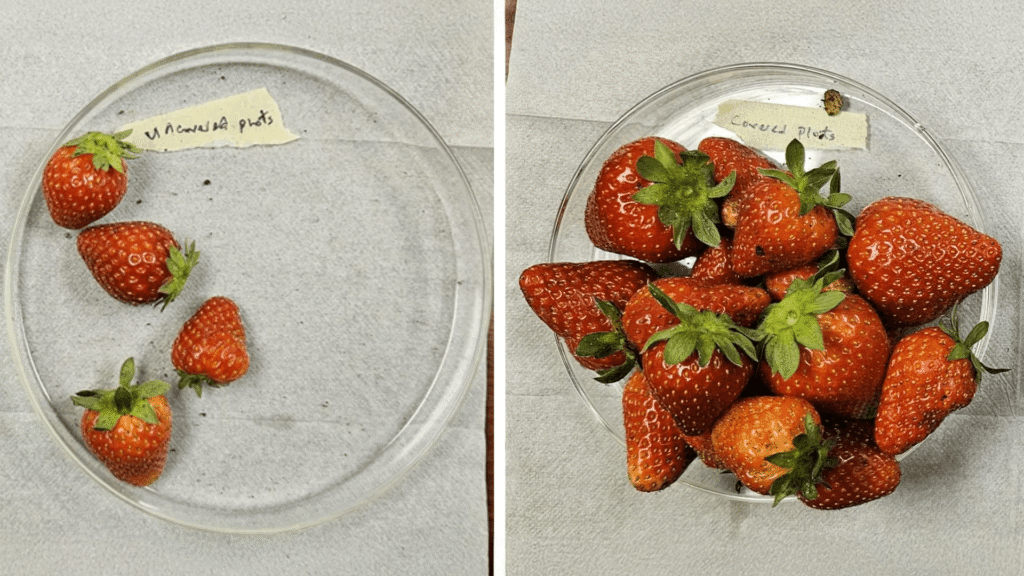
Scientists have developed a new protective textile that could dramatically increase strawberry production while helping plants withstand insect attacks.
The material, called Plant Armor, was tested on strawberry plants in tunnel field trials at North Carolina State University. Researchers found that plants covered with the textile produced yields as much as 3.56 times higher than uncovered plants.
A Protective Layer for Strawberry Plants
Plant Armor is a three-dimensional, porous fabric designed to sit directly over strawberry plants. Its structure acts as a physical barrier against insects while still allowing sunlight, rain and air to reach the plants.
Researchers found that the textile did not reduce light availability or negatively affect relative humidity, two factors that can influence plant growth.
Why Did Strawberry Yields Increase?
The researchers observed that the covered plants experienced a consistent warming effect across three growing seasons. This additional warmth appeared to help the plants reach important growth and fruiting stages earlier.
The scientists believe the improved growing conditions contributed to the much higher fruit production recorded in the trials.
Could It Reduce Pesticide Use?
Because Plant Armor physically prevents insects from reaching the plants, the technology could potentially reduce the need for conventional pesticides.
The researchers also suggest that the approach could eventually contribute to more efficient water use, although further testing would be needed to determine its wider agricultural benefits.
From Military Research to Farming
The technology has an unusual origin. Plant Armor emerged from research aimed at developing military clothing that could reduce mosquito bites and improve comfort for soldiers wearing body armour.
Researchers later explored how the textile could be used in agriculture, eventually testing it as a protective covering for strawberry plants.
What the Research Means
The findings highlight how textile engineering can be adapted to solve agricultural problems. If the technology performs similarly under different farming conditions and on a larger scale, protective fabrics could become another tool for managing insects and improving crop production.
The study was published in the journal Agriculture. However, the reported 3.56-fold increase comes from controlled tunnel field trials, so additional research will be important before judging how effectively the technology performs across different farms and growing environments.