
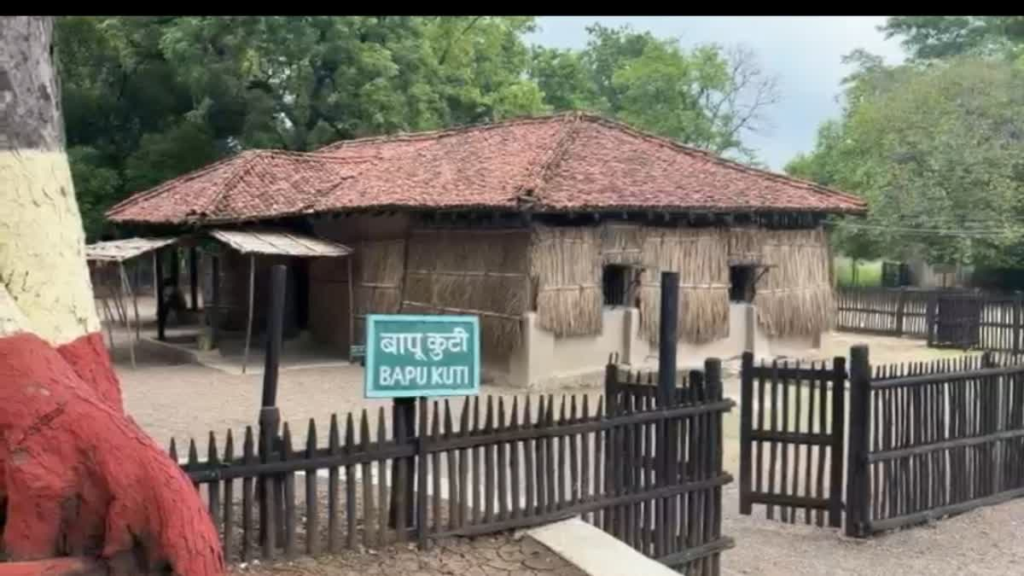
As India observes Gandhi Jayanti 2026, attention turns to places that preserve the memory of Mahatma Gandhi beyond the better-known monuments. One such place is Sevagram Ashram in Wardha, Maharashtra, where Gandhi lived for a decade and where his simple lifestyle remains visible in the ashram’s historic huts.
Gandhi’s Connection With Sevagram
Gandhi moved to the village then known as Segaon in April 1936. The settlement was a modest rural village near Wardha, with limited infrastructure at the time.
He wanted to live in a village and focus on constructive work and rural development. The village was later renamed Sevagram, meaning “village of service.”
The Remarkable ₹100 Hut Story
One of the most striking details associated with Gandhi’s stay is his instruction about the cost of his hut. According to the Ministry of Culture’s Digital District Repository, Gandhi wrote in March 1936 that as little expense as possible should be used for building the hut and that the cost should not exceed ₹100.
The detail has become a powerful reminder of his emphasis on simplicity and limited material needs.
Bapu Kuti and Its Historical Importance
Bapu Kuti became closely associated with Gandhi’s work at Sevagram. The hut witnessed meetings and interactions involving several prominent figures of the freedom movement.
The ashram also became a place where discussions connected with India’s independence movement took place, including meetings of organisations associated with Gandhi’s constructive programmes.
A Village That Became Sevagram
When Gandhi first arrived, the village had few basic facilities. There was no post office or telegraph office, and the route to Wardha was largely a footpath or cart track.
The village’s name was eventually changed to Sevagram in 1940 to avoid confusion with another nearby place and to reflect its association with Gandhi’s work.
Why the Place Matters on Gandhi Jayanti
Gandhi Jayanti is often associated with speeches and national events, but Sevagram offers a quieter way to understand Gandhi’s life. Its huts, surroundings and historical records provide a glimpse into the kind of simple environment in which he chose to live and work.
For visitors interested in India’s freedom movement, Sevagram remains an important historical destination in Maharashtra.
A Living Reminder of Simplicity
The story of the ₹100 hut stands out because it contrasts sharply with today’s ideas of luxury and large-scale construction. More than its monetary value, the story represents Gandhi’s preference for simplicity, local surroundings and a life closely connected with rural India.
On Gandhi Jayanti 2026, Sevagram’s historic huts continue to offer a tangible connection to that chapter of India’s history.