
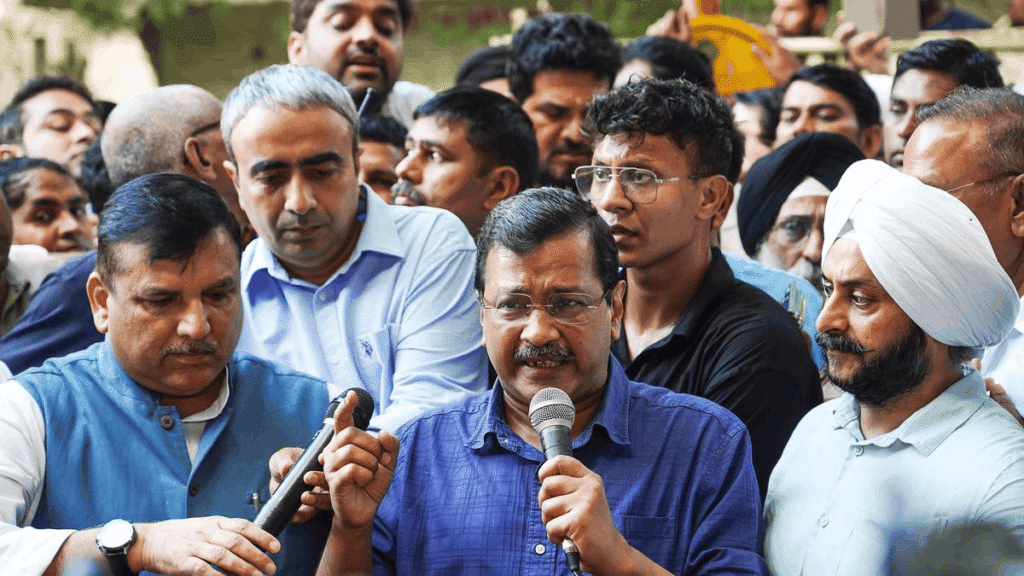
The Aam Aadmi Party (AAP) has accused the BJP-led central government of imposing a “black emergency” following the detention of protesters heading to Jantar Mantar in Delhi on October 10, 2026. The demonstration, organised by the Cockroach Janta Party (CJP), is demanding electoral reforms and the resignation of Chief Election Commissioner Gyanesh Kumar over allegations of voter-list manipulation, which the Election Commission denies.
1. AAP Criticises Centre Over Protest Restrictions
AAP leaders criticised the heavy security arrangements and police detentions ahead of the planned demonstration. The party argued that the measures were creating an atmosphere of fear and restricting peaceful political expression.
The allegations have added to the political debate surrounding the CJP protest and the authorities’ handling of gatherings in the capital.
2. Gopal Rai Accuses Government of Imposing ‘Black Emergency’
AAP MLA Gopal Rai accused the Centre of using extensive security measures to protect the chief election commissioner from criticism. He questioned the closure of metro stations and the cancellation of train services, arguing that the restrictions were disproportionate.
Rai also said that deploying additional security personnel would not suppress the movement or prevent people from raising electoral concerns.
3. Saurabh Bharadwaj Appeals for Dialogue
AAP Delhi unit president Saurabh Bharadwaj said protesters wanted to raise their concerns peacefully. He urged the government to engage with young demonstrators rather than rely on force.
Bharadwaj also invoked constitutional values and non-violence while criticising the handling of the protest.
4. CJP Protest Centres on Electoral Reforms
The Cockroach Janta Party called for a demonstration at Jantar Mantar, demanding Gyanesh Kumar’s resignation over allegations of “vote theft.” The Election Commission has denied claims of voter-list manipulation.
The CJP began as a satirical online campaign before growing into a youth-led pressure group. Its protest has attracted attention from established political parties and other organisations concerned about electoral transparency.
5. Delhi Metro Stations Closed for Security
Delhi Metro announced the temporary closure of 45 stations from 9 pm on Friday until 6 pm on Saturday for security reasons. The restrictions affected commuters as authorities prepared for the demonstration.
Police also deployed personnel and erected barricades around key areas, including the planned protest site. The measures prompted criticism over their impact on ordinary residents and access to public spaces.
6. Kejriwal Signals Support for Demonstrators
AAP national convenor Arvind Kejriwal said he and his family would attend the CJP protest and encouraged young people to participate. His statement added a prominent opposition voice to the demonstration.
The protest comes amid wider opposition demands for electoral reforms and greater accountability from the Election Commission.
7. Political Tensions Rise Over Right to Protest
The dispute has intensified debate over public order, freedom of assembly and the treatment of political demonstrators. While AAP has condemned the restrictions, authorities have cited security concerns surrounding the planned gathering.
The controversy places the government’s handling of protests and the demand for electoral transparency under renewed scrutiny. The claims made by political leaders remain contested, and further developments will depend on official responses and the course of the demonstration.
Conclusion: AAP’s “black emergency” allegation has added another dimension to the political dispute surrounding the CJP protest in Delhi. The episode highlights the continuing tensions over electoral accountability, security restrictions and the right to peaceful assembly.