

India has reiterated that its foreign policy decisions will be guided by national interests and not by pressure from any other country, amid growing international attention over the new US legislation targeting Russia and countries purchasing Russian energy.
Minister of State for External Affairs Kirti Vardhan Singh said India maintains an independent foreign policy and will take decisions based on the interests of its people. He also stressed that energy security remains an important priority for the country.
The remarks come after the United States moved ahead with legislation that gives the US President authority to impose tariffs of up to 100% on countries purchasing Russian oil and gas. India, as a major importer of Russian crude, could be affected depending on how the US administration implements the law.
Singh said India would continue to look for commercially viable and economical energy sources. The government has also maintained that securing affordable and reliable energy supplies for the Indian population is a key consideration.
The issue has broader implications for global energy markets as well as India-US economic relations. India has previously said that the possible impact of the US measures on bilateral ties and international energy markets has been communicated to American officials.
The latest developments have placed India’s energy purchases and independent foreign-policy approach under renewed international scrutiny. For now, Indian officials have emphasized that decisions regarding energy sourcing will be taken according to India’s economic and strategic interests.
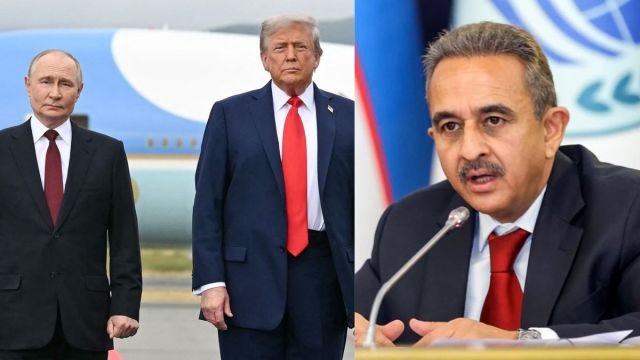
The new US sanctions framework could create additional pressure on India-US economic relations if tariffs are imposed on countries continuing large-scale purchases of Russian energy. Reports say the legislation gives the US President authority to impose tariffs of up to 100% under specified conditions.
However ,the legislation itself does not automatically mean that a 100% tariff has been imposed on India. The implementation of any such measures would depend on decisions by the US administration.
India has previously emphasized that measures affecting its energy imports could have implications for bilateral trade as well as global energy markets.Singh’s latest remarks underline New Delhi’s stated approach of maintaining flexibility in its foreign-policy and energy decisions. India has maintained relations with multiple major powers while pursuing its own economic and strategic interests.
The developments also highlight the connection between geopolitics, energy security and international trade, with decisions taken by Washington potentially affecting businesses, energy markets and bilateral economic relations.