
Indian craftsmanship has increasingly found a place on international runways, from intricate embroidery to traditional textiles. But whenever a centuries-old craft appears in global luxury fashion without clear acknowledgement, it can raise a larger question: who gets recognised when traditional craftsmanship becomes part of modern fashion?
The latest debate surrounding Ralph Lauren’s Spring 2027 collection has brought that question back into the spotlight.
The Ralph Lauren Controversy
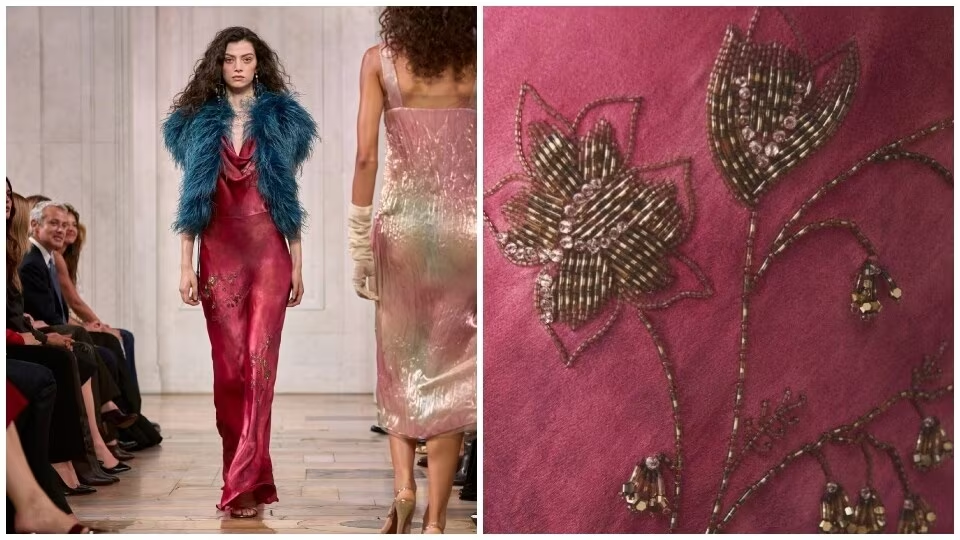
A deep-pink evening gown showcased as part of Ralph Lauren’s latest collection attracted attention because of its intricate embellishment. Critics on social media compared the work to zardozi, a traditional Indian embroidery technique.
The brand’s Instagram description referred to the gown’s fabric and hand-applied embellishments but did not identify the work as zardozi or mention Indian craftsmanship.
What Makes Zardozi Special?
Zardozi is an elaborate embroidery tradition associated with metallic threads and decorative embellishments. The technique has a long history in India and developed distinctive regional forms over centuries.
Lucknow is particularly known for its zardozi tradition, which has also received geographical indication recognition.
Why Naming a Craft Matters
For many critics, the debate is not simply about whether international designers can draw inspiration from Indian techniques.
It is about recognition.
When a traditional technique is identified by name, audiences can learn about its history and the artisans and communities connected to it. Without that context, a centuries-old craft can appear simply as a decorative design element.
Inspiration Versus Recognition
Fashion has always borrowed ideas across cultures. Designers regularly reinterpret traditional techniques, silhouettes and textiles for contemporary audiences.
The challenge comes when the cultural origins of those techniques become invisible. Recognition can help ensure that inspiration does not erase the identity of the craft itself.
India’s Craft Heritage Deserves Visibility
India has a vast textile and embroidery heritage, including zardozi, chikankari, kantha, phulkari, bandhani and many regional weaving traditions.
As Indian-inspired aesthetics become increasingly visible internationally, giving these crafts their proper names can introduce global audiences to the history behind the designs.
The Bigger Fashion Conversation
The Ralph Lauren debate reflects a wider shift in the fashion industry. Consumers are increasingly interested not just in how a garment looks, but also in where its techniques come from and who created them.
For traditional crafts, visibility can be just as valuable as commercial attention.
Fashion Can Celebrate Culture Through Credit
Global fashion does not have to avoid cultural inspiration. Instead, designers and brands can make that relationship more meaningful by acknowledging the traditions that influence their work.
For Indian craftsmanship, simply recognising the name, history and cultural context of a technique can help ensure that global visibility also brings greater appreciation.