
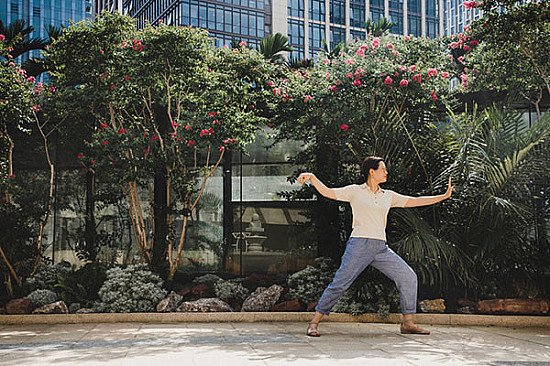
Mindfulness does not always require sitting quietly or following a traditional meditation routine. A recent Harvard Health article highlights Tai Chi walking as a simple way to combine movement, balance and mindfulness.
Tai Chi walking is based on the footwork used in Tai Chi forms. Instead of moving quickly, the practice involves slow and deliberate steps, with attention placed on how the feet touch the ground and how body weight shifts from one leg to another. Harvard Health says this approach can help people develop greater awareness of movement and breathing.
Tai Chi is a low-impact, slow-motion mind-body exercise. Traditional Tai Chi involves sequences of flowing movements, but learning a complete form can take considerable time. Tai Chi walking offers a simpler introduction by focusing mainly on the walking and weight-shifting elements.
During Tai Chi walking, each step is performed intentionally. Rather than allowing momentum to carry the body forward, practitioners slowly place the foot down and gradually transfer their weight. This can challenge balance and encourage awareness of posture and movement.
One of the key features of Tai Chi walking is its emphasis on being present during each step. Practitioners pay attention to sensations in their feet, the movement of their body and their breathing.
Harvard Health describes Tai Chi walking as a mindfulness practice because it encourages people to slow down and focus on the process of walking rather than rushing toward the destination.
Harvard Health also notes that mindful walking more generally can be practiced by focusing attention on the sensations of the feet, breathing and surroundings.
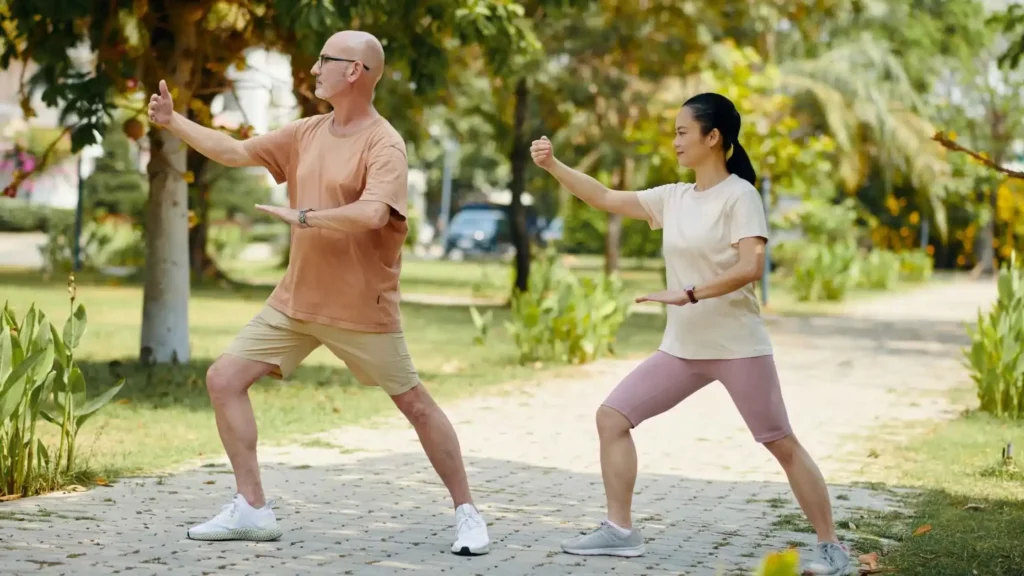
The slow weight shifting involved in Tai Chi walking can challenge balance and engage smaller muscles in the feet, ankles and lower legs. Harvard Health says the practice may help improve gait and balance, while prolonged weight-bearing may potentially support bone health.
Research and Harvard Health coverage of Tai Chi more broadly also associate the practice with improvements in strength, flexibility and balance. However, Tai Chi walking should not be presented as a replacement for medical treatment or as a guaranteed solution for weight loss or other health conditions. Harvard Health specifically cautions against exaggerated claims about what Tai Chi walking can achieve.
For beginners, the basic idea is straightforward: walk slowly, place one foot deliberately, gradually shift your body weight and remain aware of your breathing. A quiet pathway, sidewalk or hallway can provide enough space to practice.
The broader message is simple: mindfulness can be incorporated into everyday movement. Instead of treating meditation and exercise as completely separate activities, practices such as Tai Chi walking combine gentle physical activity with focused attention.