
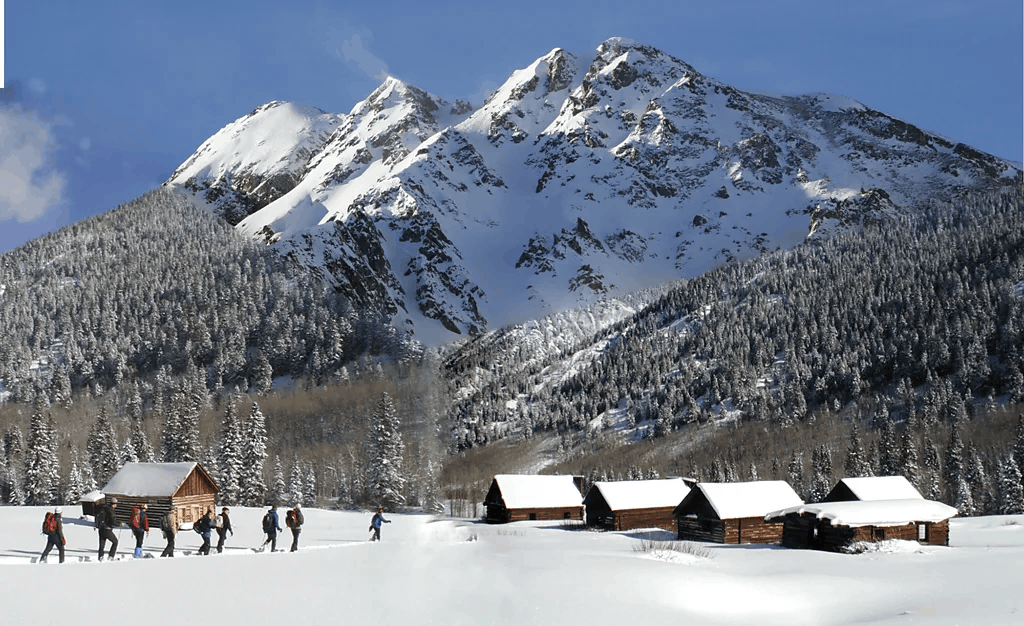
Just a short drive from the luxury ski destination of Aspen in Colorado lies Ashcroft, a historic ghost town with a fascinating past. Once a thriving silver-mining settlement, it later attracted ambitious plans to become a major ski resort. Those plans never materialised, leaving behind a quiet mountain valley, preserved cabins and a glimpse into Colorado’s mining history.
Today, Ashcroft offers a very different experience from Aspen’s bustling ski slopes, making it an intriguing stop for travellers seeking history and nature.
1. From Silver Rush to Abandoned Settlement
Ashcroft emerged during Colorado’s silver-mining boom in the late 19th century. By 1882, the settlement had grown to more than 1,000 residents and featured hotels, shops, saloons, a dance hall and a school.
However, its prosperity did not last. Mining opportunities declined, and residents gradually moved elsewhere, including to nearby Aspen. Within a few years, Ashcroft’s population had fallen sharply, and by the 1930s, most of its buildings stood abandoned.
2. The Ambitious Plan to Build a Ski Resort
Ashcroft’s story took an unexpected turn in the 1930s when a group of investors saw potential in its surrounding mountains. They envisioned a large European-style ski resort that could attract winter visitors and transform the deserted settlement into a tourism hub.
The Highland Bavarian Corporation brought in Swiss mountaineer André Roch to assess the terrain. Plans included numerous ski runs, chairlifts and a tramway climbing towards Hayden Peak, with Ashcroft imagined as a Bavarian-style mountain village.
Had the project succeeded, the area might have become one of Colorado’s leading ski destinations.
3. How World War II Changed Everything
The ambitious development project came close to moving forward, with funding secured and plans for transport infrastructure taking shape. But the outbreak of World War II disrupted the proposal.
Steel intended for the ski lifts and tramway was needed for wartime production, including military equipment. The development stalled, and Ashcroft lost its chance to compete with Aspen as a major ski resort.
Meanwhile, skiing began to grow in popularity in Aspen, helping the neighbouring town develop into the internationally recognised destination it is today.
4. What Makes Ashcroft Special Today?
Ashcroft’s failure to become a major resort helped preserve its distinctive character. Visitors can still see historic log cabins and remnants of its mining-era settlement, surrounded by the dramatic scenery of Colorado’s Elk Mountains.
Unlike Aspen, Ashcroft has no large resort infrastructure or bustling commercial centre. Its appeal lies in its quieter atmosphere, open landscapes and connection to the region’s past.
The surviving buildings offer a glimpse of the community that once flourished here before mining declined and tourism plans collapsed.
5. Outdoor Experiences in Every Season
Ashcroft is not simply a destination for history enthusiasts. Its mountain setting also offers outdoor activities throughout the year.
During winter, visitors can explore cross-country ski trails and enjoy snowshoeing through snow-covered landscapes. In warmer months, hiking and horseback riding provide opportunities to experience the surrounding forests, valleys and mountain scenery.
The area is also known for its peaceful atmosphere and limited connectivity, offering a contrast to the busy streets and modern amenities of Aspen.
6. Planning a Visit to Ashcroft
Ashcroft is approximately 12 miles (19 kilometres) from Aspen, making it a possible excursion for travellers staying in the area.
June can offer quieter summer exploration, while February is appealing for visitors seeking snowy scenery and winter activities. Conditions vary with the season, so travellers should check local access information before setting out.
Those interested in the region’s history can combine a visit to Ashcroft with sightseeing in Aspen, exploring how two neighbouring settlements followed very different paths.
Ashcroft’s story is a reminder that not every ambitious destination becomes a tourism success. Its abandoned mining town, unrealised ski-resort plans and preserved landscape have created a different kind of attraction one where the history of what almost happened is as compelling as what remains.