
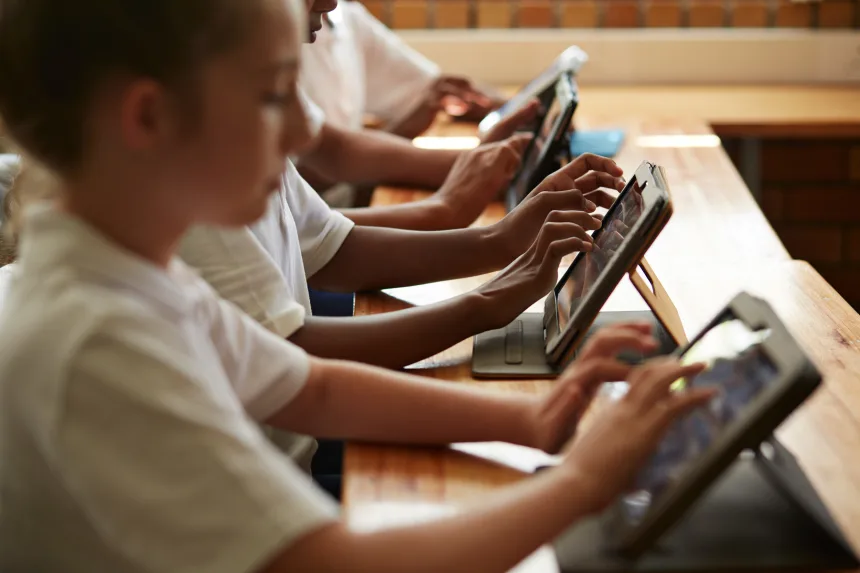
Technology has transformed classrooms, making lessons more interactive and giving students quick access to information. But as laptops, tablets and other digital devices become routine parts of school life, questions are growing about whether children are spending too much time in front of screens.
The debate is no longer simply about technology versus traditional learning. It is increasingly about finding a healthier balance between digital tools, concentration, physical activity and face-to-face interaction.
More Technology Does Not Always Mean Better Learning
Digital devices can make research, presentations and educational resources easier to access. However, simply keeping students engaged with a screen does not necessarily mean they are learning more.
The American Psychological Association recently warned that engagement with educational technology should not automatically be treated as evidence of learning.
Screens Can Compete for Attention
A tablet or laptop can quickly become a source of distraction. Multiple tabs, notifications, games and unrelated online content can pull students away from the lesson.
Research published in 2026 found that multitasking on tablets during lectures was associated with poorer comprehension, highlighting how digital distraction can interfere with learning.
The Health Side of Classroom Screen Use
The issue also extends beyond academic performance. Long periods of screen-based activity can reduce opportunities for movement and face-to-face interaction. Concerns have also been raised about digital fatigue, attention and psychological wellbeing.
A 2026 study examining Indian higher-education students found that excessive non-academic screen use was negatively associated with academic engagement and psychological wellbeing, while more moderate academic use showed potential benefits.
Children Still Need Offline Learning
Reading printed material, writing by hand, discussing ideas with classmates and participating in physical activities provide experiences that a screen cannot completely replace.
Education Week has reported that some schools are responding to concerns about excessive classroom technology by introducing breaks from screens and using more group discussion and offline activities.
The Answer May Be Balance, Not Banning Technology
Technology remains valuable when it solves a genuine learning problem. The challenge is deciding when a screen adds value and when a traditional approach works better.
Recent US education guidance similarly encourages schools to consider why, when and for how long technology is being used rather than treating digital tools as automatically beneficial.
Building Healthier Digital Classrooms
Schools can consider simple measures such as screen breaks, device-free discussions, outdoor activities and lessons that combine digital and offline methods.
The goal should not be to remove technology from education. Instead, students should learn to use it purposefully without allowing screens to dominate every part of their school day.