
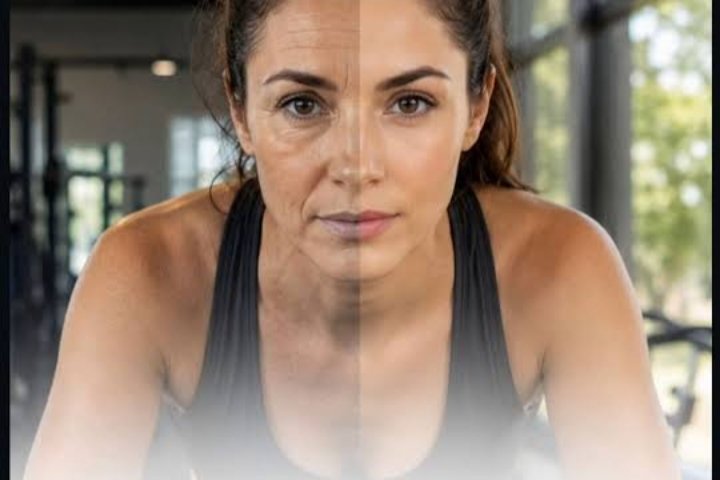
Regular exercise is widely associated with better physical health, but research suggests that its potential benefits may extend to skin health and aging. Studies have found links between physical activity and changes in skin structure, elasticity, inflammation and other biological processes involved in aging.
A 2023 study published in Scientific Reports examined 61 sedentary middle-aged Japanese women, with data from 56 participants included in the final analysis. The women followed either aerobic or resistance training for 16 weeks. Researchers found that both forms of exercise improved skin elasticity and upper dermal structure, while resistance training also increased dermal thickness.
The researchers investigated how exercise-related changes in circulating factors could affect the skin. Resistance training was associated with changes in extracellular-matrix-related processes, which are important for maintaining the structure and strength of the skin.
Earlier research has also explored how exercise may influence skin metabolism through signals released by muscles during physical activity. One study identified interleukin-15 (IL-15) as a possible pathway connecting exercise with skin mitochondrial function and aging processes.

The viral social-media claim shown in the image says that women who exercise regularly have skin that is “25 years younger at the cellular level.” That specific figure should be treated cautiously. The available research supports a relationship between exercise and certain measures of skin health, but it does not establish that regular exercise literally makes a person’s skin biologically 25 years younger.
A 2025 long-term study involving 767 participants also found that greater leisure-time physical activity in midlife was associated with lower levels of advanced glycation end-products (AGEs) in skin tissue among older women. However, this was an observational association and does not by itself prove that exercise caused the difference.
Current evidence suggests that regular physical activity may contribute to healthier skin through several pathways, including improved circulation, reduced inflammatory signaling, mitochondrial effects and changes in the extracellular matrix. However, skin aging is influenced by many factors, including genetics, sun exposure, nutrition, sleep, smoking and environmental factors.
Exercise may support healthier and more resilient skin, but the viral “25 years younger” claim goes beyond what the cited human research demonstrates. The stronger evidence supports improvements in specific skin characteristics rather than a precise 25-year reversal of cellular age.