
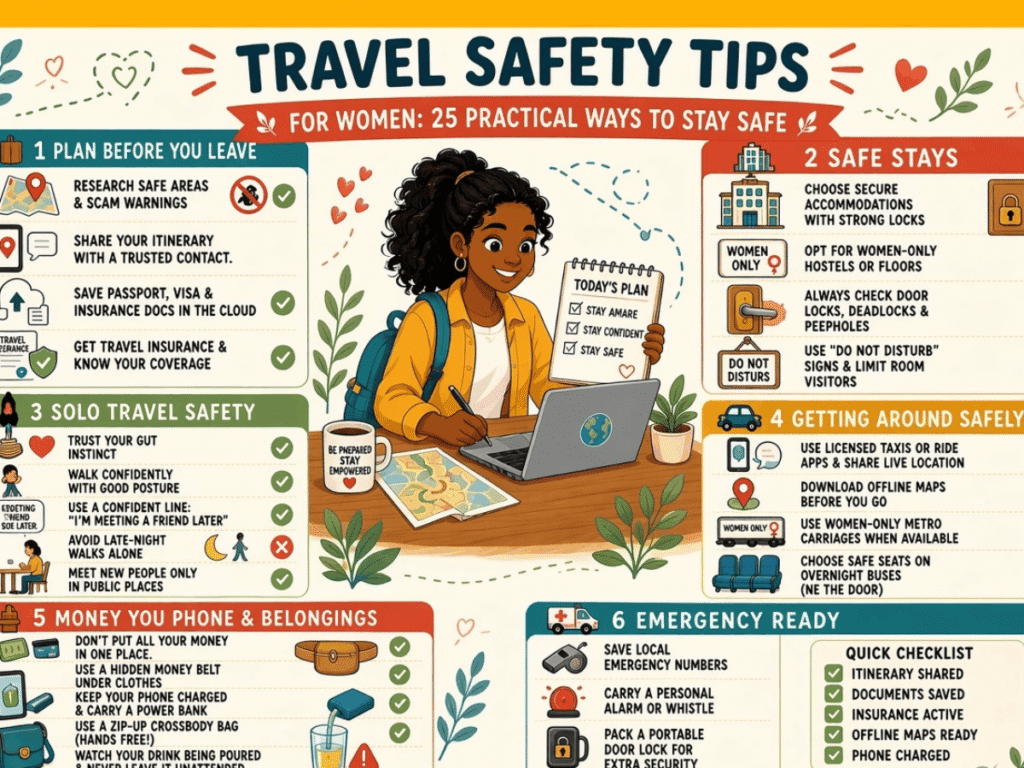
1. Research Your Destination Before Leaving
Good preparation can make a journey smoother and help travellers handle unexpected situations. Before leaving, research your destination, local customs, transport options and areas you plan to visit. Read recent reviews from other travellers and check local emergency numbers. Keep your itinerary flexible while making sure someone you trust knows your general plans.
2. Choose Accommodation Carefully
When booking a hotel, hostel or homestay, look beyond the price. Check recent reviews, the location, security arrangements and access to public transport. Accommodation on a well-connected street can make returning after an evening out more convenient. On arrival, check the door locks and windows, and request another room if anything appears insecure.
3. Use Reliable Transportation
Choose licensed taxis, reputable ride-hailing services or official airport transfers whenever possible. Before entering a cab, confirm that the vehicle and driver details match your booking. Share trip information with a trusted contact and keep an eye on the route. For public transport, familiarise yourself with routes, stops and service timings before travelling.
4. Keep Important Documents and Money Secure
Carry your passport, identification, tickets and travel insurance details securely. Store digital copies of important documents in a protected account and keep a separate backup where practical. Avoid keeping all your cash and bank cards in one place. A secure crossbody bag or money pouch can help protect essentials in crowded markets, stations and tourist areas.
5. Stay Connected While Exploring
A charged phone is an important travel companion. Download offline maps, save your accommodation address and carry a power bank for longer outings. Share your live location with someone you trust when appropriate, particularly during unfamiliar journeys. If mobile connectivity is unreliable, arrange check-in times and keep important contact numbers available offline.
6. Be Careful When Meeting New People
Meeting fellow travellers and locals can be one of the most rewarding parts of a trip. However, choose public places for first meetings and be cautious about sharing personal details, accommodation information or travel plans with strangers. If a situation makes you uncomfortable, you can leave without feeling obliged to explain yourself.
7. Take Extra Care During Night Travel
Plan your return journey before heading out in the evening. Check transport availability and avoid becoming dependent on an unfamiliar person for a ride back. When travelling overnight by bus or train, use reputable operators, keep valuables close and secure your luggage. If plans change, let your trusted contact know.
8. Protect Your Drinks and Personal Belongings
At restaurants, bars and social gatherings, keep your drink in sight and avoid accepting open drinks from people you do not know well. Keep phones, wallets and other valuables secure, especially in crowded places. If you suddenly feel unwell or unusually disoriented, seek help from trusted staff or emergency services.
9. Know What to Do in an Emergency
Save local police, ambulance and emergency contact numbers before your journey. Identify nearby staffed public places, such as hotels, shops or transport offices, where you could seek assistance. If you feel threatened, move towards a safer public area and contact someone you trust or local emergency services. A personal alarm may also be useful, subject to local rules.
10. Travel With Confidence and Flexibility
Safety planning should support a woman’s freedom to explore, not prevent her from travelling. Stay aware of your surroundings, trust your judgement and change plans when circumstances warrant it. Researching local conditions, preparing backup options and knowing where to seek help can make solo trips and group holidays more manageable.
The takeaway: Thoughtful planning, secure transport, reliable communication and awareness of local conditions can help women travel with greater confidence. No precaution can eliminate every risk, but preparation can make it easier to respond when plans