
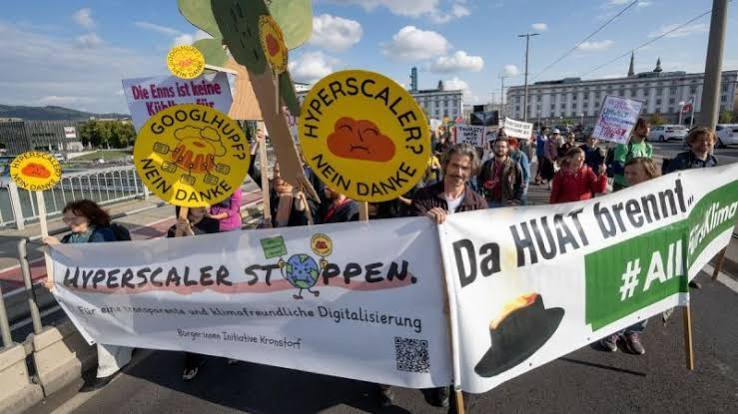
The rapid expansion of artificial intelligence is creating a new infrastructure challenge: where to build the massive data centres needed to power AI systems.
Across Europe, Africa and other parts of the world, local communities are increasingly questioning the environmental and economic costs of these facilities. Concerns range from electricity consumption and water use to pressure on land and public infrastructure.
Why Communities Are Raising Concerns
AI data centres require enormous amounts of computing power, which in turn creates significant demand for electricity and cooling. Water can also be needed to manage the heat generated by servers.
In Europe, concerns have become particularly visible as governments pursue greater digital and AI independence while dealing with water and energy constraints.
Africa Sees Similar Resistance
The debate is also spreading across Africa. In South Africa, community and civil-rights groups have challenged proposed data centre projects, arguing that large facilities could place additional pressure on already limited supplies of water and electricity.
These groups have called for greater transparency around resource consumption and stronger safeguards for communities hosting large-scale facilities.
The AI Infrastructure Trade-Off
Technology companies argue that data centres are essential to expanding AI, cloud computing and digital services. Amazon Web Services, for example, recently announced more than $1 billion in planned investments in communities hosting its US data centres, including programmes related to energy affordability, water preservation, education and job training.
At the same time, researchers and policymakers are examining how much water and electricity these facilities will require as AI workloads continue to grow.
Finding a Balance
The growing debate highlights a broader question surrounding the AI boom: how can countries expand computing infrastructure without placing excessive pressure on local resources?
More efficient cooling systems, renewable energy, reclaimed water and greater disclosure of resource consumption could become increasingly important as governments decide where future data centres should be built.
For the AI industry, technological progress may therefore depend not only on more powerful chips and models, but also on building infrastructure that communities and public utilities can support.