
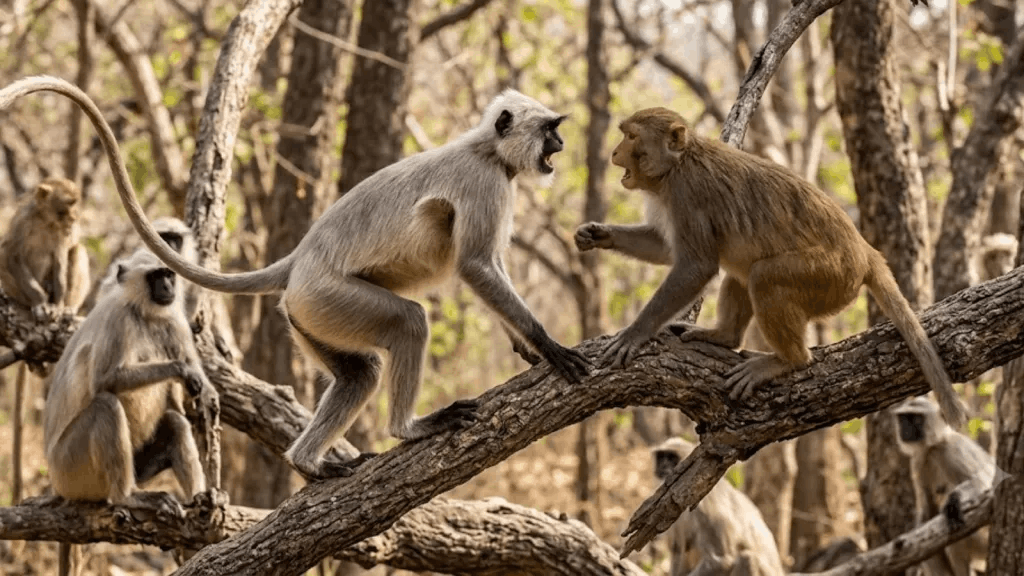
Monkeys and langurs are commonly seen across India, but many people use the two terms interchangeably. While langurs are also monkeys in biological terms, the word “monkey” in everyday conversation often refers to macaques such as rhesus monkeys. Their appearance, diet and behaviour can help tell them apart.
Look at Their Appearance
Macaques generally have a more compact build, while langurs are slimmer and have noticeably longer limbs and tails. Indian grey langurs are especially recognisable by their grey coat and dark face.
The body structure and facial features can therefore provide an easy first clue when identifying the animal.
Their Diet Is Different
Langurs mainly eat leaves, along with fruits, flowers and other plant material. Macaques have a more varied diet and are highly adaptable, often eating fruits, seeds, insects and food obtained from human environments.
Behaviour Around People
Macaques are particularly adaptable to urban environments and can frequently be seen around markets, residential areas and other places where food is easily available. Human food and poor waste management can encourage them to remain close to settlements.
Langurs can also live near people, but their behaviour and feeding patterns are generally different.
What To Do During an Encounter
People should avoid feeding or deliberately approaching wild primates. If a monkey or langur becomes aggressive, maintaining distance is important.
A bite or scratch should not be ignored. The Indian Express report advises seeking medical attention after such an encounter because primate bites and scratches can carry health risks.
Understanding the differences between macaques and langurs can help people respond more safely and responsibly when they encounter these animals.