
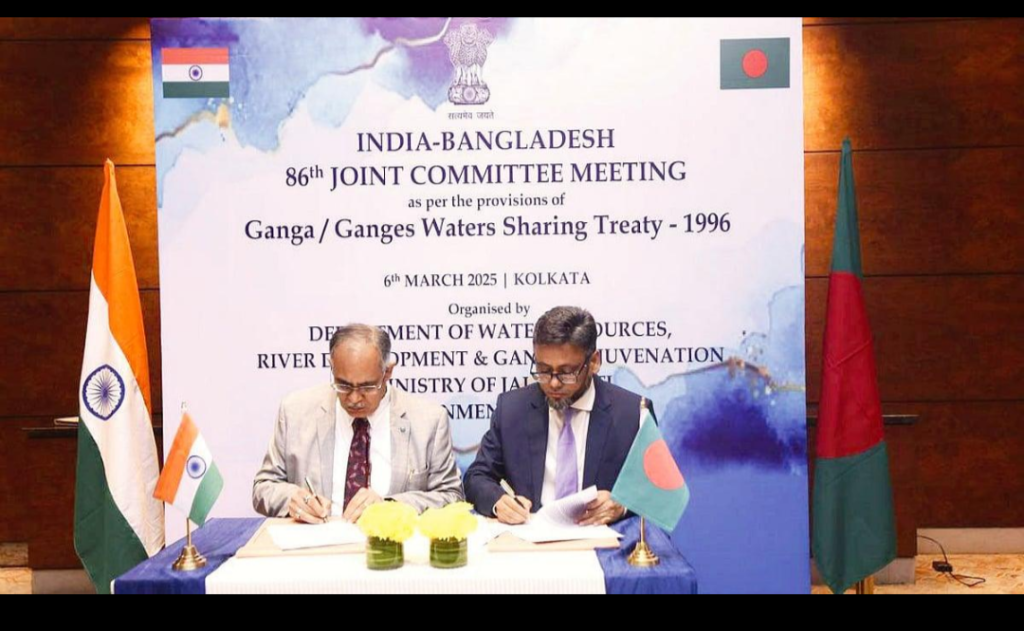
The 30-year-old Ganges Water Sharing Treaty between India and Bangladesh is once again in focus. Bangladesh has formally sought discussions on a new arrangement concerning the sharing of Ganges waters, as the existing treaty is set to expire in December 2026.
Signed in 1996, the Ganges Water Treaty ensures sharing of the Ganga river water at the Farakka Barrage during the lean season from January to May. With the treaty nearing its expiry, Dhaka has expressed interest in initiating dialogue for a renewed and more equitable framework.
According to reports, Bangladesh’s interim government has conveyed its desire to begin talks, however, formal negotiations between the two sides are yet to be scheduled. Sources suggest the new arrangement may include provisions for climate change impact, reduced dry-season flow, and improved water management.
The Ganges (Padma in Bangladesh) is critical for agriculture, drinking water, and livelihoods in its southwest region. Reduced flow during the dry season causes salinity intrusion and crop damage.
The Farakka Barrage is vital for maintaining navigability of the Kolkata Port and meeting water needs in West Bengal and Bihar.
Water sharing is one of the most sensitive issues in India-Bangladesh relations. A successful renewal will be seen as a major diplomatic achievement.
The negotiations are expected to be complex, involving technical data sharing, joint river management, and balancing the needs of both upper and lower riparian states. The inclusion of other transboundary rivers like Teesta is also being demanded by some stakeholders in Bangladesh.
The upcoming talks on the Ganges Water Treaty will be crucial for the future of water security in South Asia. Both nations are expected to adopt a cooperative and data-driven approach to ensure a sustainable and fair agreement for the next 30 years.