
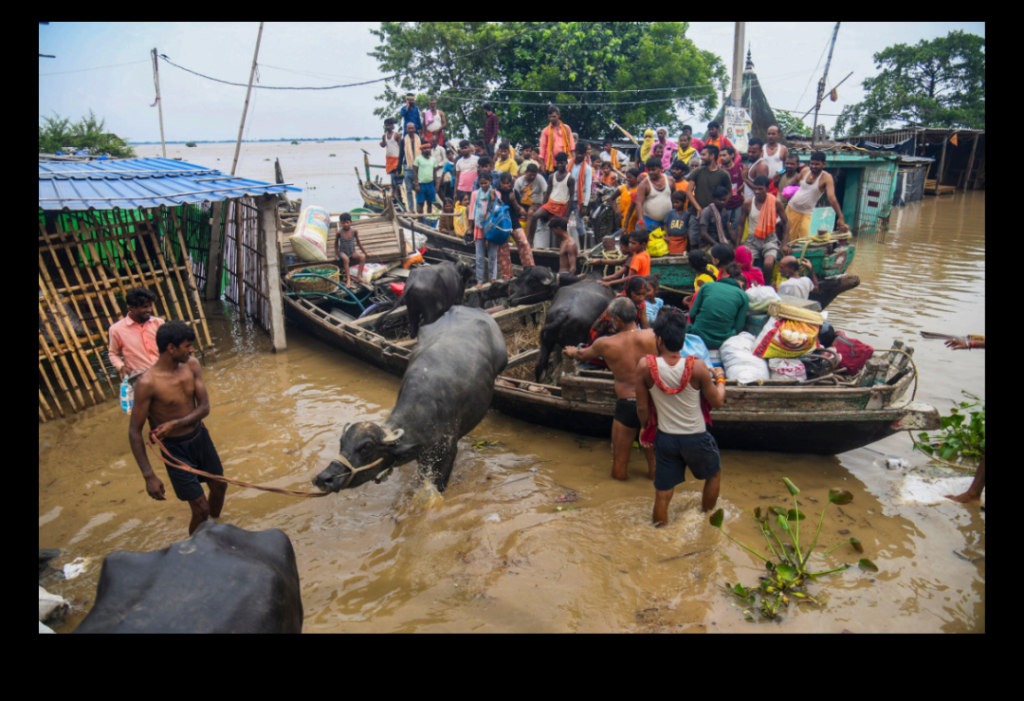
For thousands of families living along the banks of the Ganga in Bihar, floods are not a one-time disaster – they are a recurring nightmare. Every monsoon brings the same cycle of destruction, displacement, and despair, leaving survivors to rebuild their lives from scratch year after year.
Ground reports from districts like Bhagalpur, Patna, Begusarai, and Katihar paint a grim picture. As the Ganga swells during the monsoon, water enters homes, submerges farmlands, and washes away everything in its path.
Most houses in the diara (riverine) areas are made of mud and thatch. They collapse within hours of flooding, forcing families to live on embankments, roadsides, and in temporary relief camps for weeks.
Agriculture is the primary source of income. Paddy, maize, and vegetable crops ready for harvest are destroyed just before the season. Livestock, fishing boats, and stored grains are also lost.
Stagnant water leads to outbreaks of skin infections, diarrhea, and fever. Children miss months of schooling as schools turn into relief shelters.
Locals allege that relief measures are temporary. They receive food packets and polythene sheets, but no long-term rehabilitation, embankment strengthening, or compensation that matches their actual losses.
“We rebuild our house every year, only to see it collapse again next year. The river gives us life, but it also takes everything away,” says a farmer from Patna’s riverine belt.
Experts say Bihar needs a long-term flood management policy that includes scientific embankment management, early warning systems, flood-resilient housing, crop insurance, and permanent relocation plans for the most vulnerable villages.
Until a sustainable solution is implemented, Bihar’s Ganga-side communities will continue to face this annual tragedy. Their resilience is remarkable, but they need more than just resilience – they need concrete action and support.