
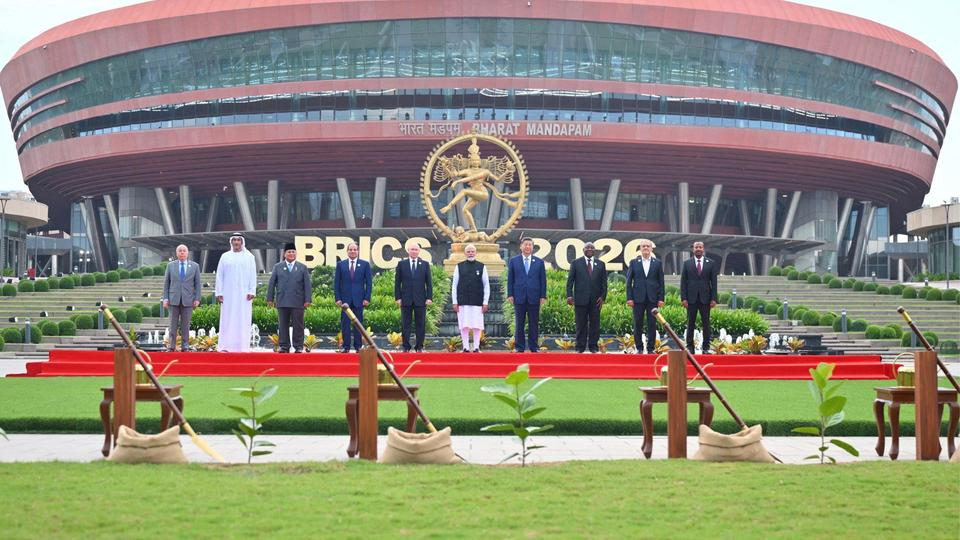
India’s hosting of the 18th BRICS Summit in New Delhi has placed the country at the centre of important conversations on global governance, economic cooperation and international peace. With leaders from major emerging economies gathering under one roof, the summit reflects the growing influence of the Global South in shaping the world’s political and economic future.
India Hosts a Major Global Gathering
The 2026 BRICS Summit brought together leaders from the expanded BRICS grouping, including Prime Minister Narendra Modi, Chinese President Xi Jinping, Russian President Vladimir Putin and Iranian President Masoud Pezeshkian. The presence of leaders from Asia, Africa and the Middle East highlighted the increasing importance of emerging economies in international decision-making.
India’s presidency has focused on building cooperation around resilience, innovation, sustainability and inclusive development. These priorities reflect the challenges faced by developing nations, including economic uncertainty, climate change, geopolitical tensions and technological disruption.
Modi-Xi Meeting Draws Attention
One of the most closely watched developments at the summit was the meeting between Prime Minister Narendra Modi and President Xi Jinping. The discussion indicated efforts by India and China to stabilise relations following years of tensions along their disputed Himalayan border.
Both sides stressed the importance of maintaining peace and improving economic, cultural and people-to-people ties. However, unresolved border issues and trade imbalances remain significant challenges for the two countries.
A Stronger Voice for Developing Countries
A major theme of the summit was the demand for reforms in global institutions, particularly the United Nations Security Council. India has consistently argued that international organisations should better represent the realities of today’s world.
The New Delhi Declaration called for greater participation of emerging markets and developing countries in global decision-making. China and Russia also reiterated support for India’s aspiration to play a larger role in international institutions, including the UN Security Council.
Economic Cooperation Takes Centre Stage
The summit also highlighted the need for stronger economic partnerships among BRICS nations. Discussions focused on trade, investment, supply-chain resilience, digital transformation and cross-border payment systems.
India used its BRICS presidency to promote cooperation among businesses, startups and small enterprises. New initiatives aimed at connecting MSMEs and encouraging innovation could help create stronger economic links between member countries.
Global Conflicts Add Urgency
The summit took place amid continuing conflicts in West Asia and Ukraine, making international peace an important part of the discussions. BRICS leaders expressed concern over rising tensions and called for diplomacy, dialogue and respect for international law.
The grouping also opposed unilateral economic sanctions and protectionist trade measures, arguing that such policies can place additional pressure on developing economies.
What the Summit Means for India
For India, the BRICS Summit offers an opportunity to strengthen its position as a bridge between major global powers and developing nations. New Delhi’s approach reflects its effort to maintain strategic relationships with countries such as Russia and China while also expanding cooperation with Western economies.
The summit has reinforced India’s image as an important diplomatic and economic force in a rapidly changing world order.
A Changing Global Order
The 2026 BRICS Summit demonstrates that global power is becoming increasingly distributed among multiple centres of influence. While differences between member countries remain, the grouping continues to provide a platform for emerging economies to discuss shared challenges and promote their interests.
For India, hosting the summit is not just a diplomatic achievement but also an opportunity to shape conversations about the future of global governance, economic development and international cooperation.