
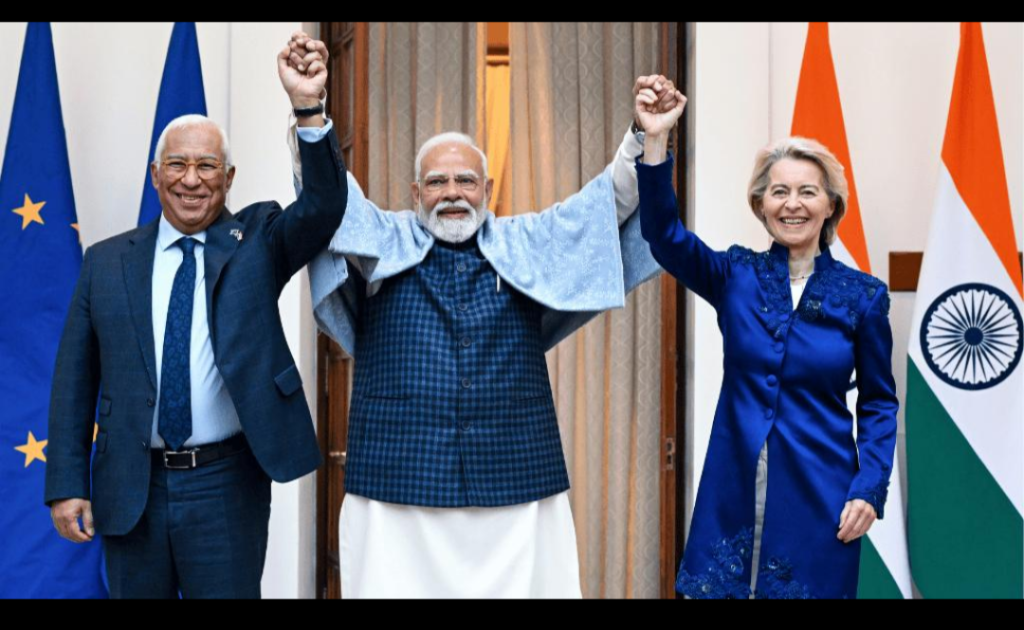
India has joined the European Union, Canada, Australia and other partners in a strong show of support for multilateral cooperation. On the sidelines of the 81st United Nations General Assembly High-Level Week in New York, the countries launched the Partners for Multilateralism (P4M) initiative and adopted a joint declaration reaffirming commitment to international law, peace, inclusive development and shared prosperity.
The inaugural P4M Summit was held on 21 September 2026. Initial co-sponsors are Australia, Barbados, Brazil, Canada, the European Union, India and Kenya. Additional countries later endorsed the declaration, including Albania, Bosnia and Herzegovina, Croatia, Cyprus, Finland, Guatemala, Liechtenstein, Luxembourg, Moldova, Norway, San Marino, Slovakia, Spain, Türkiye and Uruguay.
Titled A Joint Commitment to Multilateralism, International Law, Peace and Prosperity, the declaration expresses concern over growing polarisation, the spread of conflict, violations of international law, and the increasing use of power politics, protectionism, coercion and the threat or use of force. These trends, the co-sponsors warned, pose a threat to international peace and security
Reaffirming that the multilateral system founded on the United Nations Charter remains indispensable, while calling for it to be renewed and reformed so that it becomes more effective, representative, inclusive and fit for purpose.
Strengthening multilateral institutions, particularly the United Nations through initiatives such as UN80, to better prevent conflict, respond to crises, deliver sustainable development, promote fair trade, protect human rights and the rule of law, and address emerging challenges.
Upholding sovereign equality, territorial integrity, peaceful settlement of disputes and the prohibition on the threat or use of force.
Promoting fair, open, resilient, predictable and inclusive economic cooperation — including more diversified and resilient global supply chains, reform of the multilateral trading system, an improved international financial architecture, and stronger coordination on digital transformation, artificial intelligence, climate change and global health.
The declaration also stresses closer partnerships with regional organisations and support for regional integration, describing multilateral cooperation as open, fair, equitable, inclusive, networked and practical.