
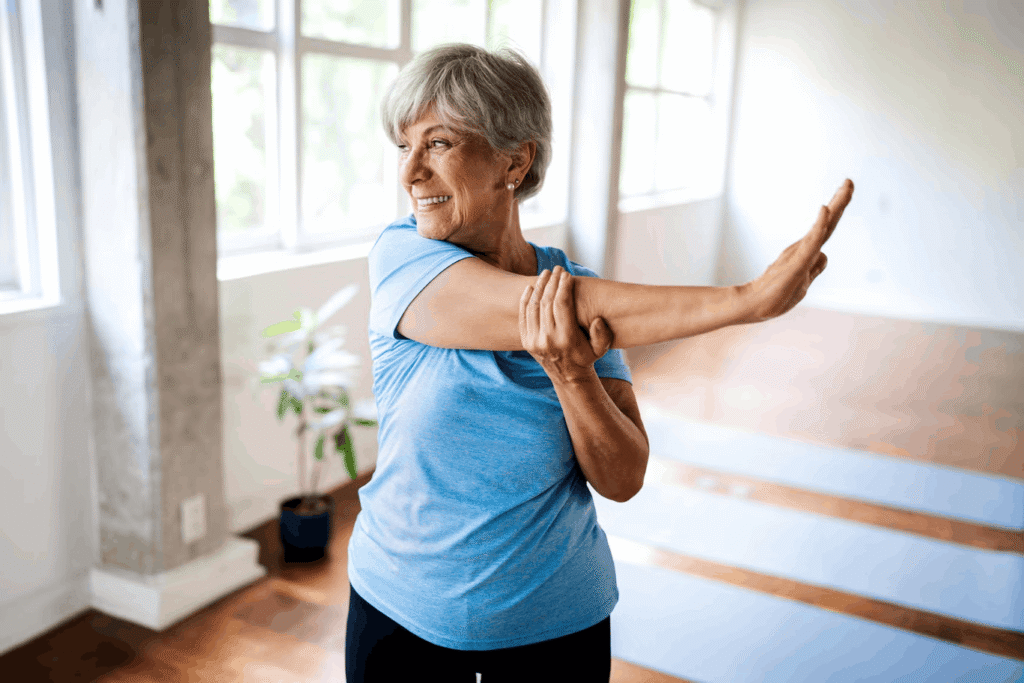
Ageing does not automatically mean losing the ability to bend, stretch, lift or move comfortably. However, spending more time sitting and less time being physically active can gradually affect flexibility, muscle strength and mobility. Regular movement, enjoyable activities and simple exercises can help people maintain physical function as they grow older.
1. Why Movement Becomes More Difficult
Many adults gradually lose muscle strength, power and flexibility as they age. Reduced physical activity can contribute to these changes, making everyday tasks such as climbing stairs, getting up from a chair or bending down more challenging.
Age-related muscle loss, known as sarcopenia, is one factor that can affect mobility. However, physical decline is not inevitable, and appropriate exercise can help preserve strength and independence.
2. The Importance of the ‘Use It or Lose It’ Principle
The body adapts to the activities it performs regularly. When people repeatedly practise movements such as squatting, reaching, walking and bending, they help maintain the strength and coordination those actions require.
Long periods of inactivity can make familiar movements feel harder over time. Incorporating different types of movement into daily life can help counter this pattern and keep the body accustomed to a wider range of activities.
3. Make Everyday Activities Count
Staying active does not always require a gym membership or a strict workout schedule. Walking to nearby shops, gardening, taking the stairs, carrying groceries and standing up regularly during the day can all add movement to a routine.
These activities can make it easier to build consistent habits, particularly for people who find conventional exercise programmes difficult to maintain.
4. Why Strength and Flexibility Matter
Strength helps people perform everyday tasks, from lifting objects to rising from a chair. Flexibility and mobility support comfortable movement, while balance exercises can help reduce the risk of falls.
A balanced routine can include resistance exercises, gentle stretching, brisk walking and activities that challenge coordination. The intensity should suit individual ability and increase gradually.
5. Make Exercise Enjoyable
Enjoyment can make physical activity easier to sustain. Dancing, recreational sports, swimming, cycling and active games offer alternatives to repetitive gym sessions.
Finding activities that feel rewarding can encourage people to move more often. Consistency is generally more useful than following an ambitious routine that becomes difficult to maintain.
6. Small Changes Can Support Healthy Ageing
Fitness expert Darryl Edwards advocates fitting movement naturally into existing routines rather than relying entirely on structured workouts. Short, regular bouts of activity can help people develop sustainable habits.
Older adults and beginners should start at a comfortable level and increase activity gradually. Anyone with significant pain, balance problems or a health condition that affects exercise should seek advice from an appropriate healthcare professional.
Maintaining mobility is not about trying to remain young forever. It is about preserving the ability to move confidently, perform everyday tasks and remain independent for as long as possible.