
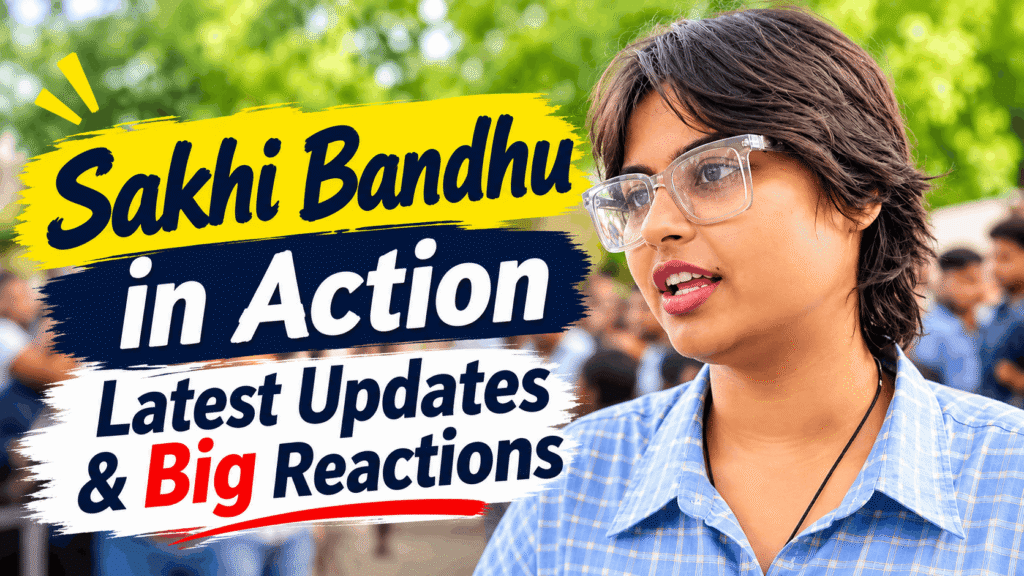
A new generation of student activists is using social media to take campus issues to a much wider audience. Sakhi Bandhu, associated with Jamia Millia Islamia (JMI) and the Students’ Federation of India (SFI), became a prominent name during the student demonstrations held in New Delhi in July 2026.
Sakhi attracted public attention through participation in protests, political commentary and humorous Instagram videos. Their growing popularity also brought discussions about online expression, student rights and the challenges faced by young people who speak publicly about political issues.
Academic Background and Student Organisation
Sakhi Bandhu is a student at Jamia Millia Islamia in New Delhi and is associated with the Students’ Federation of India, a student organisation linked to the Communist Party of India (Marxist).
Their public profile expanded beyond university activities through videos addressing government policies, political developments and student concerns. Sakhi uses they/them pronouns and identifies as a queer student.
July 2026 Demonstrations Brought Wider Recognition
Sakhi became more widely recognised during student protests in July 2026 connected to the NEET-UG examination controversy.
On July 20, demonstrators associated with the Cockroach Janta Party organised a march towards Parliament under the banner of ‘Sansad Chalo’. Protesters demanded the resignation of then Education Minister Dharmendra Pradhan over the handling of the examination controversy.
Sakhi took part in the demonstration and subsequently uploaded videos describing the police response. They alleged that protesters had been beaten and that their clothes were torn during the confrontation. The videos attracted considerable attention online.
Political Humour Helped Expand Their Reach
Apart from protest-related footage, Sakhi became known for using satire to discuss political and social developments.
Their Instagram reels addressed unemployment, government decisions and police conduct. The expression ‘Vastegune Huia’ also became associated with their online presence.
This style of communication helped Sakhi connect with younger audiences who consume political content through short videos rather than conventional news formats.
Instagram Restrictions Triggered Questions
In August 2026, Sakhi raised concerns after several protest-related videos became unavailable in India.
According to a report published by ThePrint on August 7, four reels uploaded between July 20 and July 25 had reportedly been removed or restricted. The videos included material about the July demonstration, commentary on Delhi Police, an unemployment parody and an interaction with food volunteer Mohammed Junaid.
Instagram notifications reportedly referred to community standards and government or law-enforcement notices under India’s Information Technology framework.
A Delhi Police official told ThePrint that the department regularly flags content it considers objectionable and denied specifically targeting posts connected with the Cockroach Janta Party.
Reported Online Harassment
Sakhi’s increased visibility also brought personal attacks and abusive messages. They reported receiving body-shaming comments and threats relating to their gender identity.
Reporting by The Japan Times, drawing on Bloomberg coverage, described the harassment Sakhi said they had experienced. DFRAC also documented abusive online comments directed at Sakhi and other people who became prominent during the July protests.
Allegations circulating online that Sakhi was a paid protester were part of the backlash and have not been established as facts.
A New Dimension of Student Participation
Sakhi’s experience illustrates how student activism can extend beyond university campuses through digital platforms. Demonstrations, satire and online commentary have allowed young campaigners to communicate their concerns to much larger audiences.
The questions surrounding restricted videos and online abuse also highlight the difficulties faced by activists whose public participation attracts intense digital scrutiny.
Sakhi Bandhu’s emergence has become part of a wider discussion about student voices, political expression and the growing influence of social media in India’s protest movements.