
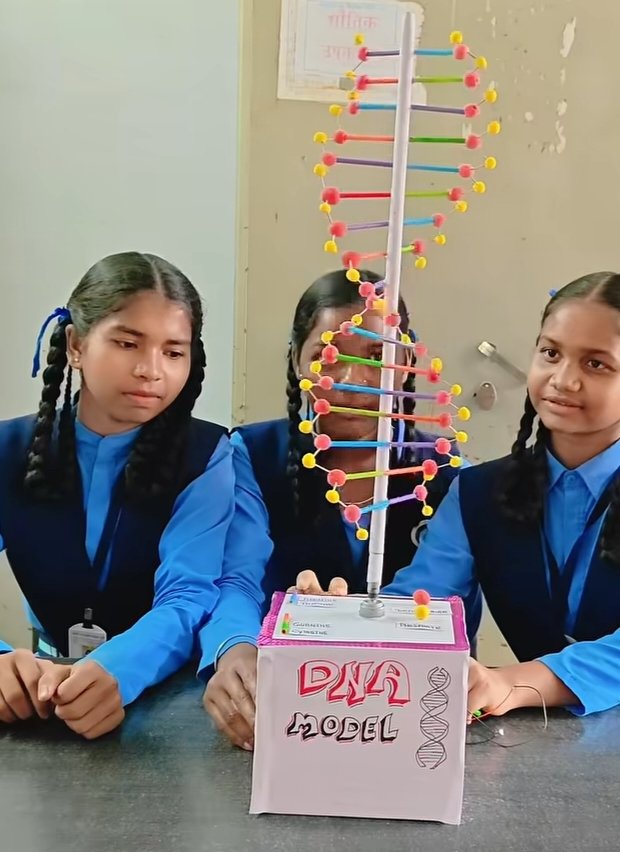
A school science exhibition turned into an opportunity for high school students to demonstrate their creativity and scientific understanding by presenting a homemade DNA double helix model. The student-made project attracted attention for its simple design and clear representation of the structure of DNA.
Science exhibitions provide students with an opportunity to move beyond textbooks and understand scientific concepts through practical activities. The DNA model was presented as an educational project to explain the basic structure and importance of DNA in living organisms.
The DNA double helix model represents the familiar twisted-ladder structure of deoxyribonucleic acid, commonly known as DNA. DNA carries genetic information that plays an important role in the growth, development and functioning of living organisms.
By creating the model using easily available materials, the students demonstrated how scientific concepts can be presented in a simple and visual format. The project also helped make a complex biology topic easier for visitors and fellow students to understand.
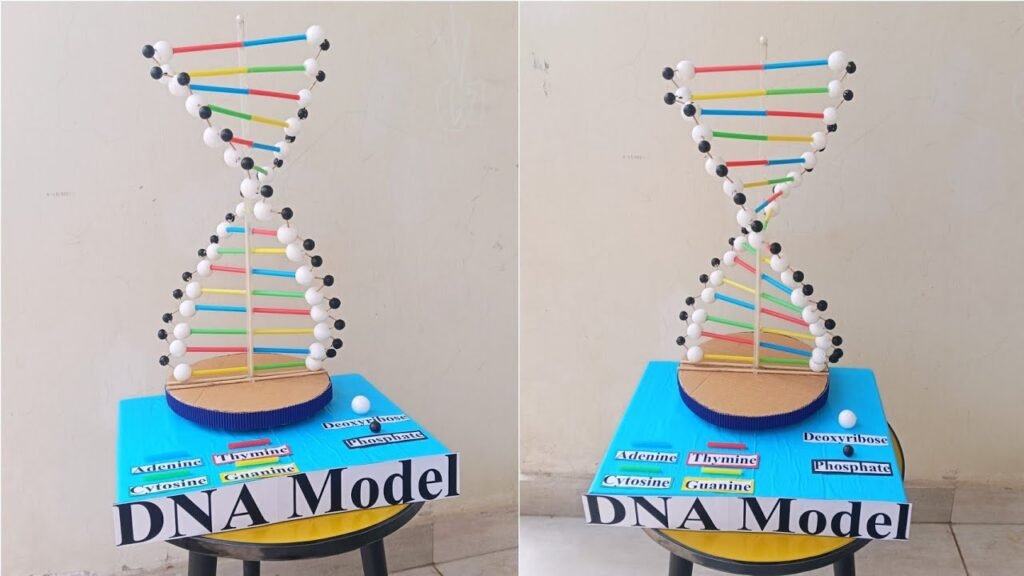
The homemade DNA model highlights the importance of hands-on learning in school education. Instead of relying only on diagrams in textbooks, students can use models and experiments to explore scientific ideas in a more practical way.
Such projects encourage students to develop creativity, teamwork, presentation skills and problem-solving abilities. They also give young learners confidence to explain their projects and answer questions from teachers, parents and other visitors.
School science exhibitions often feature projects from subjects including biology, physics, chemistry, environmental science and technology. These events allow students to present their ideas and learn from projects prepared by their classmates.
The homemade DNA double helix project is an example of how a simple school-level activity can turn an important scientific concept into an engaging learning experience. Such initiatives can encourage students to take greater interest in science and explore future opportunities in scientific research and technology.