
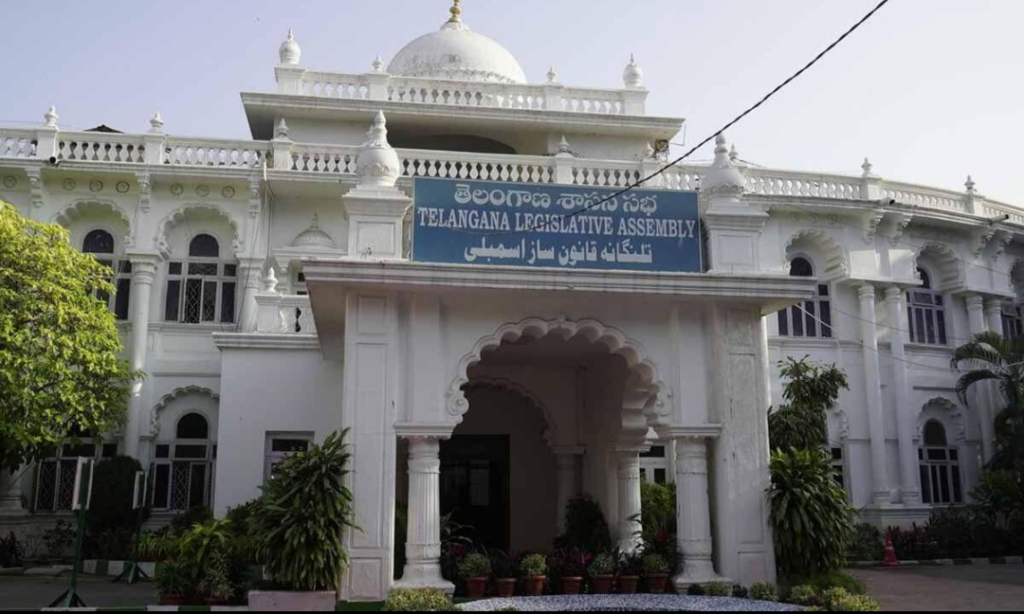
Telangana Governor Shiv Pratap Shukla has given his assent to the Core Urban Region (Integrated Governance) Bill, 2026, popularly known as the CURE Bill. The legislation, passed by the Telangana Legislative Assembly on September 12, 2026, officially became an Act on September 22 after receiving the Governor’s approval.
The CURE Act replaces the seven-decade-old Greater Hyderabad Municipal Corporation (GHMC) Act, 1955, and establishes a unified statutory framework for the expanding Hyderabad metropolitan area. It formally governs the Core Urban Region comprising three municipal corporations: Greater Hyderabad Municipal Corporation, Cyberabad Municipal Corporation, and Malkajgiri Municipal Corporation.
Creates an integrated governance structure for coordinated urban administration across the three corporations.Introduces a capital value-based property tax system (replacing the earlier annual rental value method).
Residential properties are to be taxed at 0.15% of capital value and non-residential at 0.75%. The maximum annual revision in property tax was capped at 10% (reduced from the original 20% proposal during Assembly debate).
Establishes new specialised bodies including a CURE Apex Governance Council, CURE Executive Committee, CURE Disaster Management Authority, Traffic Management and Road Safety Authority, and other coordination mechanisms.
Aims to support planned growth, uniform rules, and the government’s “Telangana Rising 2047” vision for a modern Hyderabad.
Legislative Affairs Minister D. Sridhar Babu, who moved the Bill on behalf of Chief Minister A. Revanth Reddy (who holds the Municipal Administration portfolio), stated that the new law would enable faster and more planned development while bringing governance closer to citizens in the spirit of the 74th Constitutional Amendment.
The Bill has triggered significant public and expert debate. A draft was released for public consultation in July 2026, attracting over 4,000 representations. The government claimed it incorporated 70 specific changes before introducing the final version. However, critics, including public policy expert Donthi Narasimha Reddy, argued that key citizen suggestions were not adequately reflected and urged the Governor to return the Bill for reconsideration before assent.
The composition and powers of the CURE Apex Governance Council, which does not include elected representatives from the corporations.
Reduced statutory role of ward committees compared with the old GHMC Act.
Provisions allowing CURE authorities to exercise powers beyond the Core Urban Region.
The shift to capital-value property tax and its potential impact on residents.
Concerns over the adequacy of the public consultation process and democratic decentralisation.
In the Assembly, the BJP opposed the Bill and demanded its withdrawal, while AIMIM leader Akbaruddin Owaisi sought referral to a select committee. The CPI offered support with some reservations. An amendment capping the property tax revision at 10% was accepted during the debate.
With the Governor’s assent now granted, the CURE Act is set to reshape urban governance in Hyderabad and its surrounding areas. Implementation details and rules under the new law will determine how the reforms unfold in practice.