
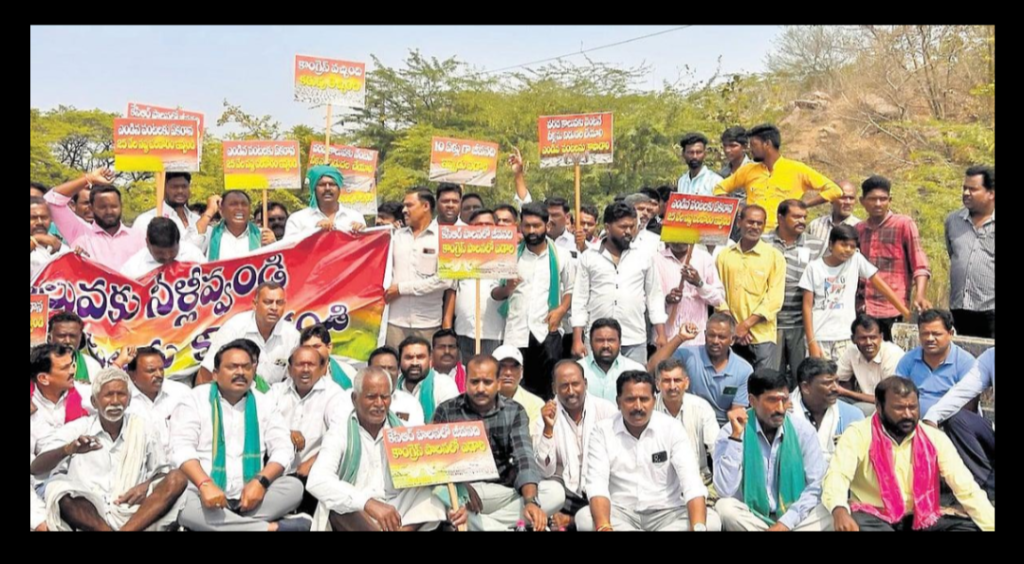
Farmers in Telangana’s Wanaparthy district took matters into their own hands and opened the left canal regulator gates of the Priyadarshini Jurala Project after protesting the stoppage of irrigation water. They said the water was urgently needed to protect their standing crops.
What Happened
Agitated farmers from the Jurala ayacut area staged a day-long protest at the project site on September 19–20, 2026, demanding the immediate release of irrigation water. When officials did not provide an assurance, the farmers moved to the left canal regulator, opened the gates themselves, and released water into the canal.
The protest was supported by local farmer groups, including those associated with the CPI(M). Farmers argued that their paddy and other standing crops were withering due to the lack of water and that repeated appeals to authorities had gone unanswered.
Official Response
Project officials and police later intervened. The gates were closed again, and a heavy police presence along with irrigation and revenue officials was deployed at both the left and right canal regulators to prevent further attempts by farmers to release water.
Authorities cited limited water availability in the reservoir (live capacity reported around 5.1 TMC against a gross capacity of about 8.81 TMC) and the need for clearance from higher officials. Some farmers accused officials of giving inconsistent information about water stocks and argued that releasing water for irrigation would not affect drinking water supplies.
Farmers’ Concerns
Farmers, many of them small and marginal cultivators, said they had invested heavily in the current crop season and could not afford crop failure. They maintained that the water was essential to save the standing crop in the Jurala command area.
The incident created a tense atmosphere at the project site, with continuous monitoring by officials and police.
The development has put pressure on the state government to address irrigation water release schedules for the Jurala ayacut, especially as farmers continue to demand a reliable supply until the crop reaches maturity.