
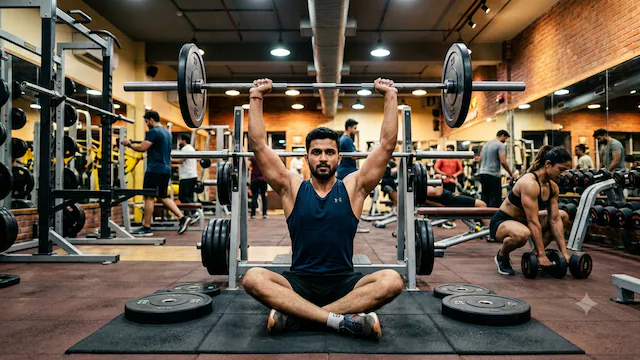
If you want to add a challenging movement to your strength-training routine, the Z press is worth considering. This seated overhead press works the shoulders while also demanding core stability, upper-body control and good posture.
Unlike a traditional shoulder press, the Z press is performed while sitting on the floor with your legs extended. This removes much of the assistance you can get from your lower body, making controlled movement especially important.
What Is the Z Press?
The Z press is an overhead pressing exercise usually performed with dumbbells, a barbell or kettlebells. You sit on the floor with your legs stretched forward, keep your torso upright and press the weights from shoulder level to overhead.
Because there is no bench supporting your back, your core has to help maintain a stable position throughout the exercise.
Which Muscles Does It Work?
The movement primarily targets the shoulders, particularly the deltoids. Your triceps also assist with the pressing motion, while your abdominal and upper-back muscles work to keep your body stable.
This combination makes the Z press useful for people who want more than a basic shoulder-strengthening exercise.
Why Add It to Your Workout?
1. Builds Shoulder Strength
The absence of leg drive means your upper body has to do more of the work. This can make even moderate weights challenging.
2. Challenges Your Core
Keeping your torso upright while pressing overhead requires continuous core engagement.
3. Improves Pressing Control
The movement encourages you to avoid excessive momentum and focus on a controlled pressing path.
4. Tests Mobility
Sitting upright with your legs extended requires adequate hamstring and upper-back mobility. Difficulty maintaining this position can highlight areas that need attention.
How to Perform a Z Press
Start with a light weight and concentrate on technique.
- Sit on the floor with your legs extended in front of you.
- Keep your chest lifted and spine neutral.
- Hold dumbbells or another suitable weight at shoulder level.
- Brace your core before pressing.
- Push the weights overhead without leaning backwards.
- Lower them slowly to the starting position.
- Repeat while maintaining the same controlled posture.
Using less weight is often preferable if a heavier load causes you to lose your position.
Common Mistakes to Avoid
One of the biggest mistakes is trying to lift too much weight. This can cause you to lean backwards or excessively arch your lower back.
Rushing through repetitions can also reduce control. The goal is not simply to move the weight overhead but to maintain a stable torso throughout each repetition.
Who Should Try It?
The Z press can be useful for experienced strength-training enthusiasts looking for a challenging accessory movement. Beginners can also learn it, but starting with a light load or an easier variation may be more appropriate.
People with existing shoulder, back or significant mobility issues should consider getting professional guidance before adding the movement to their routine.
Final Takeaway
The Z press may look simple because it is performed while sitting on the floor, but that position removes several sources of assistance. The result is a demanding exercise that combines shoulder strength, core stability and pressing control.
If your form remains strong, adding the Z press to a balanced strength programme can provide a fresh challenge for your upper body.