
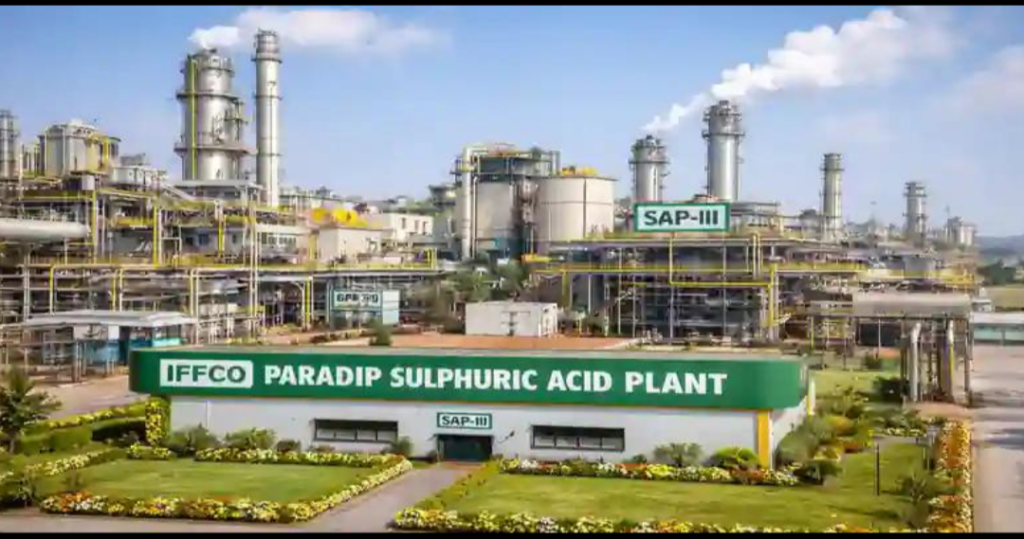
India is confronting a sharp rise in sulphur import prices, which have increased significantly over the past year due to disruptions affecting global energy supply chains. Sulphur is a key raw material for the fertiliser industry, particularly for the production of di-ammonium phosphate (DAP), single super phosphate (SSP) and other complex fertilisers.
Price Surge Details
Landed (cost plus ocean freight) prices of sulphur imported into India have more than trebled over the last year. Since the beginning of 2026, prices have roughly doubled to around $1,050–1,100 per tonne. Industry sources indicate that prices briefly touched even higher levels (around $1,150 per tonne) in recent months.
Sulphuric acid prices have also risen correspondingly, currently ranging around $330–350 per tonne.
Why Prices Are Rising
Sulphur is primarily recovered as a by-product of oil and gas refining. Recent disruptions include:
Ukrainian long-range attacks on Russian oil refineries and gas facilities
Targeting of energy infrastructure in the Persian Gulf region (affecting Saudi Aramco, QatarEnergy, Abu Dhabi National Oil Company and related operations)
These events have constrained supply from major producing regions. In addition, growing demand for sulphuric acid in electric vehicle battery production (particularly for nickel processing) has added further pressure on global availability.
Impact on India’s Fertiliser Sector
India’s annual sulphur consumption is estimated at 3.8–3.9 million tonnes, of which the fertiliser industry accounts for approximately 2–2.1 million tonnes.
Higher sulphur costs directly raise the production expense of phosphatic fertilisers. This comes at a time when the sector is already navigating global commodity volatility and subsidy considerations. Domestic manufacturers of DAP, SSP and complex fertilisers face increased input costs, which could influence production economics and subsidy requirements.
While India has managed urea and LNG imports to support nitrogen fertiliser production, sulphur presents a distinct challenge because of its dependence on refining output and limited alternative large-scale sources in the short term. Industry officials have described the current situation as a crisis for phosphatic fertiliser availability and cost structures.
The situation remains under close watch by the fertiliser industry and policymakers as global energy and commodity markets continue to experience volatility.