
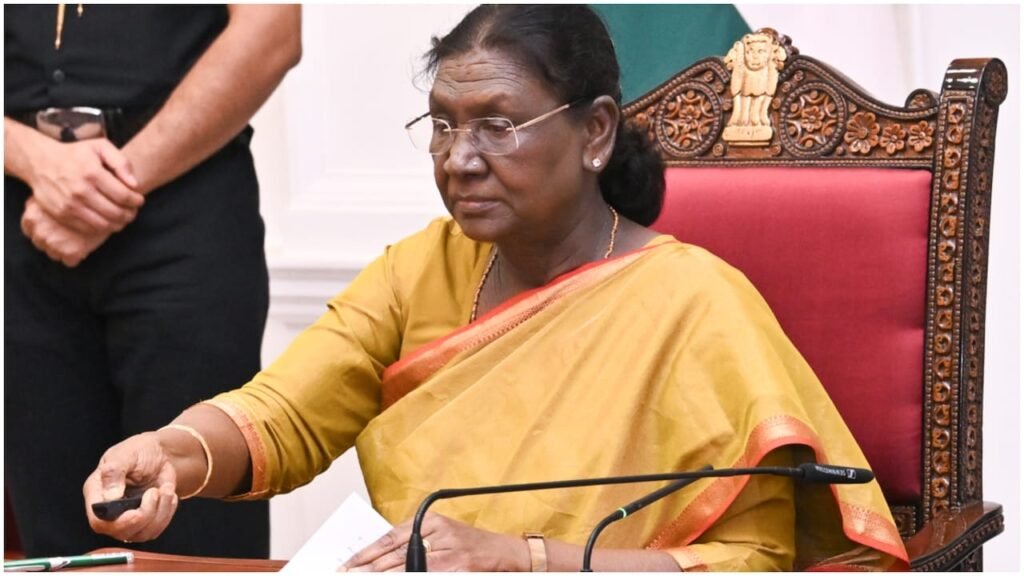
The Gujarat Uniform Civil Code (UCC) Bill, 2026, has received the assent of President Droupadi Murmu, clearing the final constitutional hurdle for the legislation. A notification published in the Gujarat Government Gazette Extraordinary dated October 1, 2026, confirmed that the President gave her assent on September 17, 2026. The law has been notified as Gujarat Act No. 15 of 2026.
Gujarat has thus become the second state in India after Uttarakhand to enact a comprehensive Uniform Civil Code. The Act will come into force on a date to be appointed by the state government through a separate notification in the Gazette.
Marriage and divorce
Succession and inheritance
Adoption
Live-in relationships and related matters
It extends to the whole of Gujarat and also applies to residents of Gujarat living outside the state. However, it specifically excludes members of Scheduled Tribes covered under Article 342 of the Constitution and persons or groups whose customary rights are protected under Part XXI of the Constitution.
Marriage Registration: Registration of marriages is mandatory. Couples must submit a memorandum for registration within 60 days of the marriage. Failure to do so can attract a penalty of up to ₹10,000.
Prohibition of Bigamy: The Code prohibits polygamy and bigamy
Equal Inheritance Rights: Sons and daughters are granted equal rights in succession and inheritance, irrespective of religion.
Live-in Relationships: The law regulates live-in relationships, requires their registration, recognises children born from such relationships as legitimate, and provides for maintenance rights.
Minimum Marriage Age: The legislation prescribes a minimum age of 21 years for men and 18 years for women.
The Bill was passed by the Gujarat Legislative Assembly on March 24, 2026, after a debate lasting more than seven hours. It was drafted on the basis of recommendations by a committee headed by former Supreme Court judge Justice Ranjana Prakash Desai.
With the President’s assent now secured, the state government will frame and notify detailed rules for the practical implementation of the Uniform Civil Code in Gujarat.