
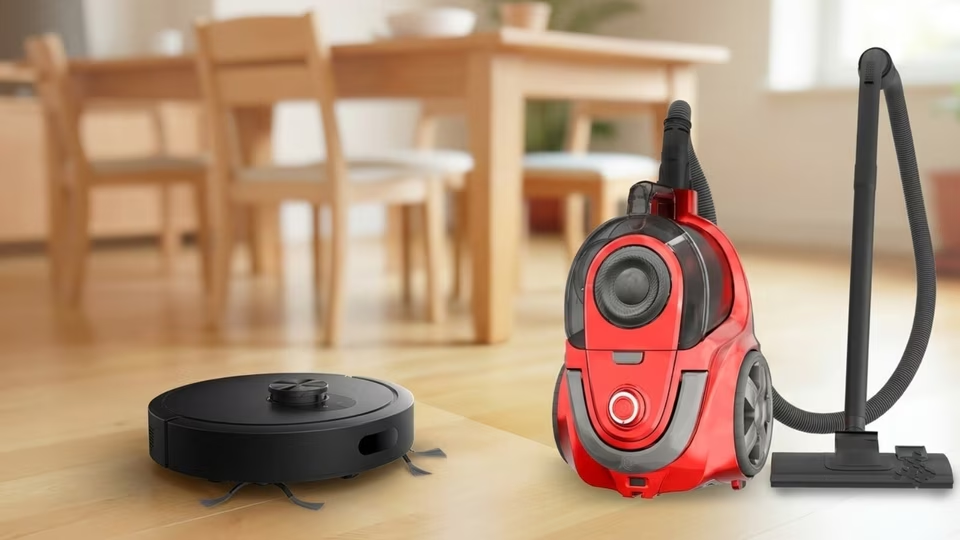
Home cleaning is increasingly becoming part of the smart-home revolution. From automated floor cleaning to app-controlled appliances, technology is changing how households handle everyday chores.
One of the clearest examples is the rise of robot vacuum cleaners, which promise to take care of routine floor cleaning with minimal human involvement. Traditional vacuum cleaners, however, continue to offer advantages that automated machines cannot always match.
Robot Vacuums Put Daily Cleaning on Autopilot
Modern robot vacuums can move around a home independently, clean floors and, in some models, mop them as well.
Advanced versions use technologies such as room mapping, obstacle detection and app controls. Some premium models can also empty their dust containers or wash their mops automatically.
This makes them particularly attractive to people with busy schedules who want floors cleaned regularly without having to operate a machine themselves.
Traditional Vacuums Still Have an Important Role
Despite the automation, robot vacuums are not a complete replacement for conventional machines.
Traditional or cordless vacuums are generally more useful when cleaning stairs, sofas, mattresses, curtains, shelves and narrow corners. They also give users greater control when dealing with a sudden spill or concentrated patch of dirt.
Convenience Comes With a Higher Entry Cost
Price is another major difference.
Basic traditional vacuum cleaners can be relatively affordable, while advanced robotic models can cost considerably more, particularly when features such as self-emptying, smart navigation and automated mopping are included.
However, buyers should consider more than the initial price. A robot’s ability to perform scheduled cleaning can save time over months and years.
Indian Homes Have Their Own Cleaning Challenges
Dust, food particles, hair and everyday outdoor dirt can quickly accumulate on floors in Indian homes.
That makes regular maintenance particularly important. Robot vacuums can help by running frequent cleaning cycles, while a traditional vacuum remains useful for deeper or targeted cleaning.
Smart Features Are Becoming the Real Differentiator
The biggest change in this category is no longer simply suction power.
Features such as LiDAR mapping, app controls, obstacle avoidance, multi-floor maps and automatic dust disposal are turning vacuum cleaners into connected home devices.
The appliance is increasingly expected to understand the home rather than simply clean it.
Which One Makes More Sense?
For someone who wants hands-free daily maintenance, a robot vacuum can be a convenient choice.
For households that need intensive cleaning across furniture, stairs and different surfaces, a traditional or cordless vacuum can remain more practical.
For many homes, the smartest solution may actually be a combination: use a robot for routine floor maintenance and a conventional vacuum for deeper cleaning.
The Future of Home Cleaning
Vacuum cleaners are moving from simple household appliances toward intelligent assistants. As navigation, automation and artificial intelligence improve, future devices are likely to require even less human intervention.
The real shift is therefore not necessarily from traditional vacuums to robots. It is toward homes where cleaning becomes increasingly automated, scheduled and connected.
Robot Vacuum vs Traditional Vacuum: Which Is Better for Your Home?