
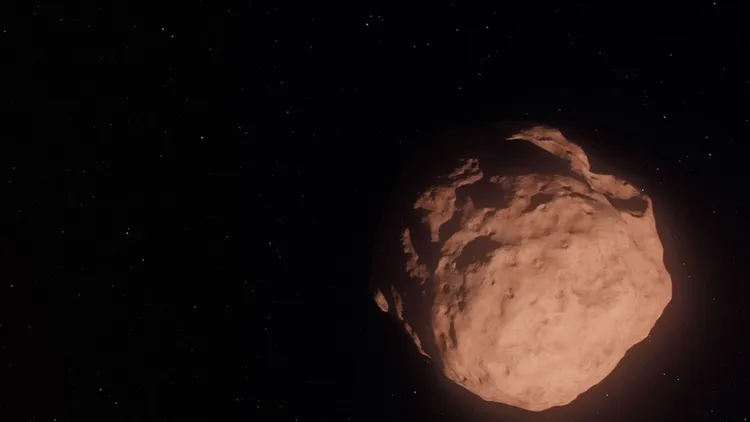
Astronomers have discovered 27 previously unknown objects in the distant outer regions of the solar system, using NASA’s James Webb Space Telescope and Hubble Space Telescope together. The tiny frozen bodies orbit beyond Neptune and are offering scientists new clues about how the solar system formed and changed over billions of years.
A New Look at the Outer Solar System
The newly identified objects belong to a group known as trans-Neptunian objects, or TNOs. These small icy bodies travel around the Sun at distances greater than Neptune’s orbit.
Because they are extremely faint and far from Earth, many of them have remained undetected until now. The combined observations of Webb and Hubble allowed researchers to study some of the smallest objects ever directly observed in this region.
Why Finding Them Is Difficult
Objects beyond Neptune receive very little sunlight, making them difficult to see. Their slow movement across the sky also makes them challenging to distinguish from distant stars and galaxies.
Hubble provides sharp optical observations, while Webb adds powerful infrared capabilities. Using both telescopes helped scientists locate and study objects that would be difficult to identify with either observatory alone.
Scientists Found Fewer Small Objects Than Expected
One of the biggest surprises was the number of small TNOs detected. Researchers expected to find more smaller bodies based on existing models of the Kuiper Belt and outer solar system.
The lower-than-expected number suggests that scientists may need to reconsider how collisions, fragmentation and planetary migration shaped this distant region.
Their Colours Preserve Ancient History
The researchers also found that the colours of the newly studied objects followed patterns similar to those seen among larger trans-Neptunian bodies.
These colour differences may reflect the chemical composition of their surfaces and the amount of sunlight they have received. Since many of these objects have remained relatively undisturbed, they may preserve information from the early stages of solar system formation.
Clues About How Planets Were Formed
The outer solar system contains leftover material from the time when the planets were forming. Studying these frozen objects can help scientists understand how larger worlds, including Neptune and other planets, developed.
Their orbits, sizes and surface properties may also reveal how gravitational interactions moved material around the young solar system.
Could This Help Explain Planet Nine?
Some distant solar system objects have unusual or clustered orbits, leading astronomers to propose the existence of a hypothetical Planet Nine far beyond Neptune.
The new discoveries do not prove that Planet Nine exists. However, better information about the population and movements of distant TNOs could help scientists test different explanations for unusual orbital patterns.
A Major Step in Solar System Research
The joint observations demonstrate the value of combining space telescopes with different strengths. Hubble’s detailed imaging and Webb’s infrared sensitivity provide complementary information about faint and distant objects.
As future surveys continue, astronomers may discover many more hidden worlds beyond Neptune, bringing scientists closer to understanding the ancient history of our cosmic neighbourhood.