
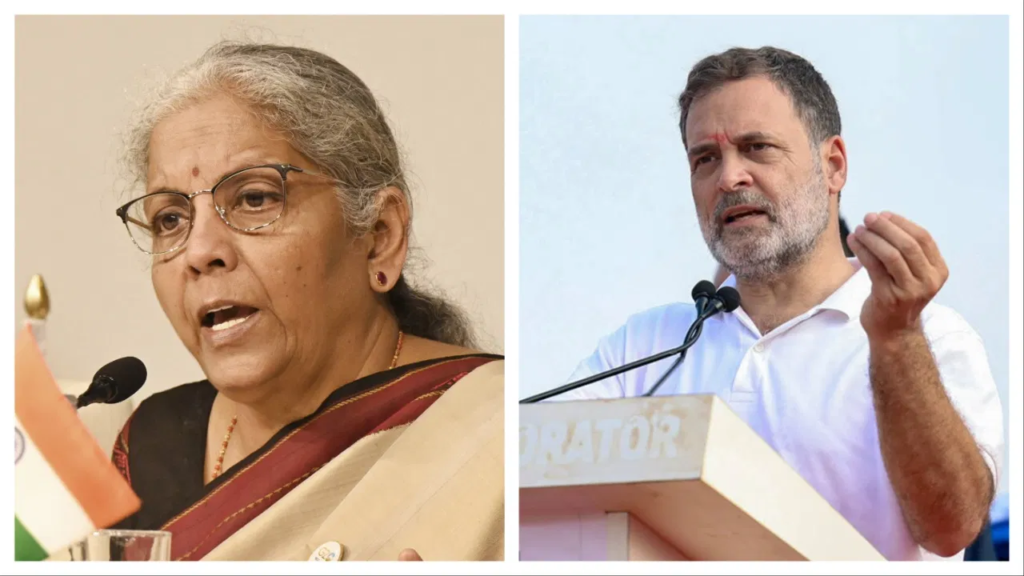
The proposed sale of the government’s controlling stake in IDBI Bank has triggered a fresh political confrontation between Congress leader Rahul Gandhi and Finance Minister Nirmala Sitharaman.
Gandhi has questioned the Centre’s decision to proceed with the transaction and expressed support for bank employees and unions opposing the proposed sale.
The Congress leader pointed to the bank’s reported profit of approximately Rs 9,000 crore in the previous financial year, questioning why a profitable public-sector lender should be sold.
Rahul Gandhi Questions Centre’s Decision
Gandhi argued that the government should strengthen public financial institutions instead of transferring ownership to private interests. He also questioned the explanation provided by the Centre regarding the proposed transaction.
Responding to his criticism, Sitharaman accused previous Congress-led governments of political interference in banking operations. She alleged that lending decisions during the UPA period contributed to IDBI Bank’s financial difficulties.
The Finance Minister maintained that the NDA government had worked to improve the bank’s position through professional management and recapitalisation exceeding Rs 25,000 crore.
Cabinet Approves Major Stake Transaction
According to the source report, the Union Cabinet approved the proposed sale of a combined 60.72% stake in IDBI Bank to a subsidiary of Canada’s Fairfax Financial Holdings for around Rs 52,878 crore on October 14, 2026.
The proposed transaction includes a 30.48% stake held by the Central government and another 30.24% owned by the Life Insurance Corporation of India.
Bank Unions Announce Strike
The controversy has also reached the banking workforce. Unions have called for a nationwide strike on November 2 and 3 to protest against the proposed transaction.
With political leaders and employee organisations raising objections, the IDBI Bank stake sale is emerging as a major issue in the debate over public-sector banking and privatisation.