
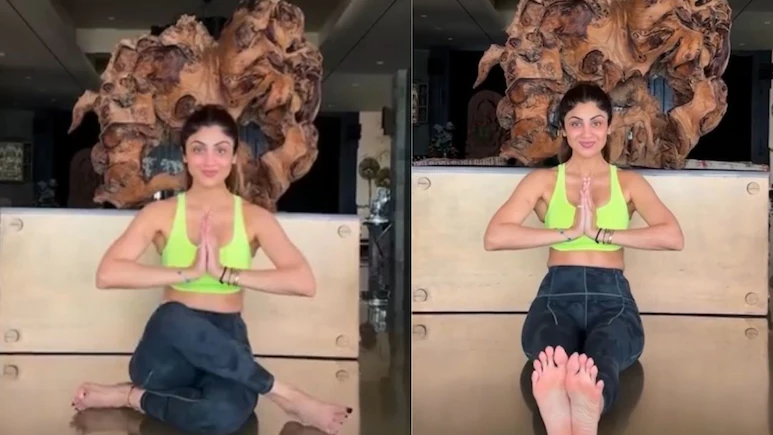
Actor Shilpa Shetty is encouraging fitness enthusiasts to look beyond conventional workouts with a movement challenge that tests strength, balance and flexibility. In a recent Instagram video, she demonstrated how to get up from the floor without using her hands, highlighting the importance of functional fitness in everyday life.
The exercise may look simple, but it requires coordinated movement, lower-body strength and control.
1. What Is Shilpa Shetty’s Workout Challenge?
Shilpa begins by sitting on the floor with her legs crossed in a Gomukhasana-style position. She then rises to a standing position without using her hands for support before carefully lowering herself back down.
The movement requires the body to maintain balance while transitioning between sitting and standing. It also challenges coordination and stability.
2. Which Muscles Does the Exercise Work?
The floor-to-stand movement engages several muscle groups, including:
- Quadriceps: Help straighten the knees while standing.
- Glutes: Support hip movement and help lift the body.
- Hamstrings: Assist with hip movement and lower-body control.
- Core muscles: Help stabilise the torso and maintain balance.
Hip and ankle mobility also play an important role in completing the movement smoothly.
3. Why Functional Fitness Matters
Functional fitness focuses on movements used in daily activities, such as sitting, standing, bending and climbing stairs. Exercises that improve strength and balance can help people perform these tasks with greater confidence.
Being able to get up from the floor without assistance can be one useful indicator of physical capability, although it is not a complete measure of overall health or fitness.
4. Is the Challenge Suitable for Beginners?
Not everyone should attempt the full movement immediately. Beginners can start by practising sit-to-stand exercises from a sturdy chair, using their hands for support if needed.
As strength and balance improve, they can gradually work towards more challenging variations. There is no need to force the movement or compare performance with someone else’s.
5. How to Try It More Safely
Choose a non-slip surface and keep a sturdy support nearby. Move slowly, maintain control and stop if you experience pain, dizziness or instability.
People with knee or hip arthritis, osteoporosis, neurological conditions, balance difficulties or recent surgery should seek professional advice before trying the challenge. Using support is a sensible modification, not a failure.
6. The Bigger Lesson Behind Shilpa’s Challenge
Shilpa’s workout highlights how small movements can reveal the importance of strength, mobility and coordination. Fitness is not limited to lifting weights or completing intense cardio sessions; maintaining the ability to move comfortably in everyday life also matters.
A gradual routine combining strength training, balance work and mobility exercises can help support functional fitness over time.