
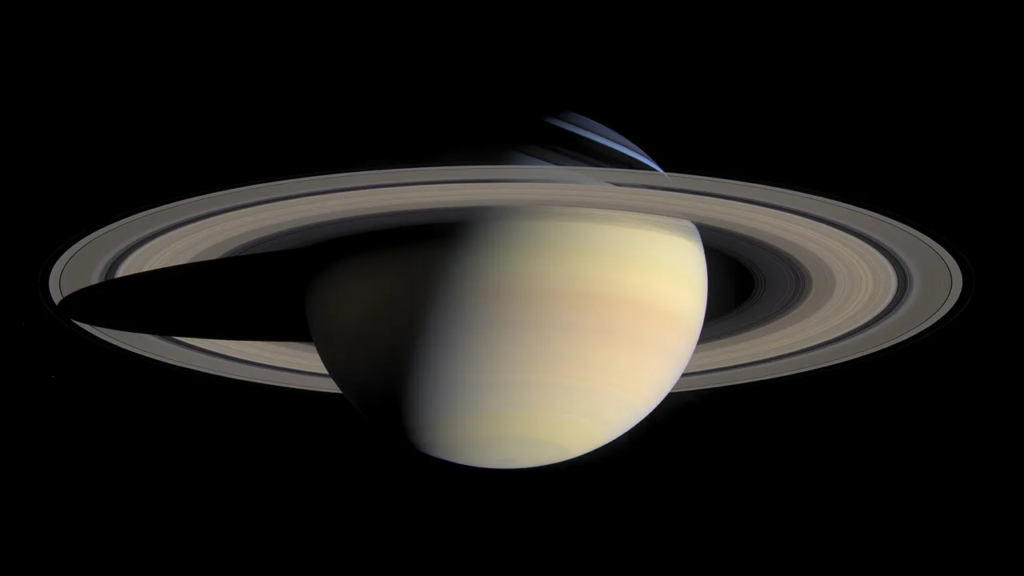
Skywatchers have a special reason to look up this week as Saturn reaches opposition on October 4, 2026. At opposition, Earth comes between the Sun and Saturn, placing the planet on the opposite side of the sky from the Sun. This makes Saturn particularly bright and visible for much of the night.
Why October 4 Is Special
Saturn will be at its brightest for the year around opposition. It will rise around sunset, remain visible through the night and set around sunrise.
The planet should appear as a bright, yellowish point of light that can be spotted without a telescope under suitable viewing conditions.
Can You See Saturn Without a Telescope?
Yes. Saturn is bright enough to be visible to the naked eye during opposition.
However, there is an important difference between seeing Saturn and seeing its rings. The planet can be identified without equipment, while a telescope is needed to clearly observe its famous ring system.
What About Saturn’s Rings?
Saturn’s rings have been gradually becoming more visible after appearing nearly edge-on from Earth in 2025.
A telescope can reveal the rings as an oval surrounding the planet. With larger equipment and favourable conditions, experienced observers may also be able to spot finer details such as the Cassini Division.
How to Spot Saturn
For the best experience, choose a location away from bright city lights. Allow your eyes several minutes to adjust to the darkness and look toward the eastern sky after sunset.
Saturn will remain visible as it moves across the night sky, reaching its highest position around the middle of the night before gradually moving toward the western horizon.
A Telescope Makes the View Better
A basic telescope can transform Saturn from a bright point into a recognisable planetary disc with rings.
Live Science recommends a telescope with at least a 4- or 5-inch aperture for observing finer ring details.
Why Opposition Happens
Saturn does not suddenly move dramatically closer to Earth during opposition. Instead, the alignment of Earth, Saturn and the Sun makes the planet appear especially prominent in our night sky.
Because Saturn takes about 29.4 years to orbit the Sun, opposition occurs roughly once every year and a few days as Earth catches up with the slower-moving planet.
A Perfect Week for Stargazing
Saturn’s opposition offers an easy opportunity for beginners to explore astronomy. You don’t necessarily need expensive equipment a clear sky, a dark location and a little patience can be enough to spot the ringed planet.
For those with access to a telescope, however, October’s Saturn viewing can offer a much more detailed look at one of the Solar System’s most recognisable worlds.