
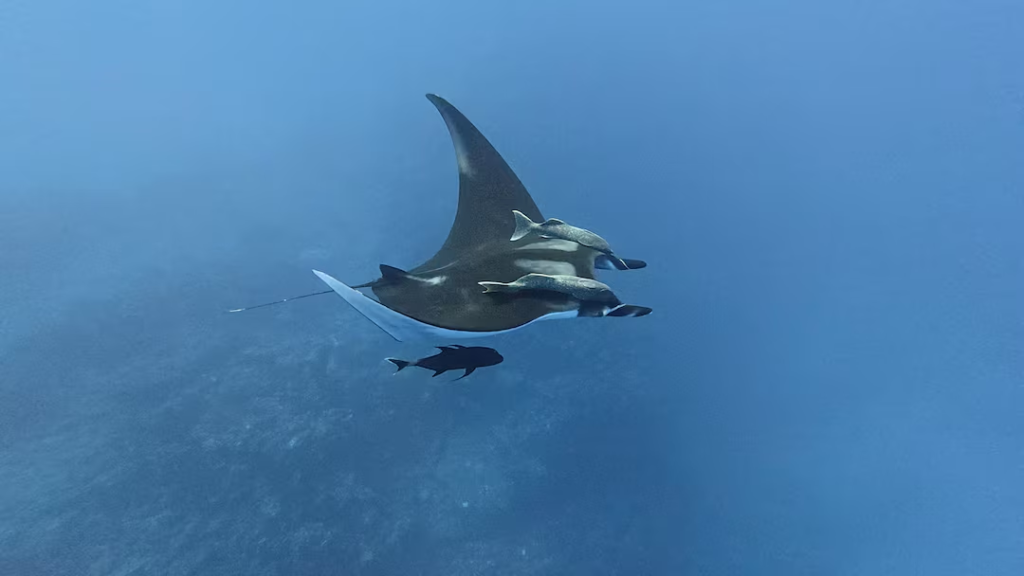
Young giant manta rays tend to remain in coastal waters, while adults travel hundreds of kilometres across Central America, according to a new study tracking the endangered marine species.
Researchers monitored manta rays off Costa Rica between 2018 and 2025. Published in Frontiers in Fish Science in October 2026, the study offers new insights into how the animals’ movements change as they mature.
Young Manta Rays Prefer Coastal Waters
The study found that immature manta rays largely stayed in shallow coastal areas within Costa Rica’s waters. These locations offer access to food and reef habitats, while potentially reducing exposure to large ocean predators.
The younger rays measured around 3 to 3.5 metres across. Researchers believe staying close to shore may help them avoid threats such as orcas and tiger sharks.
Adults Travel Much Farther
Larger, mature manta rays showed a different pattern. Measuring approximately 4 to 4.5 metres across, some travelled hundreds of kilometres and reached waters near Guatemala.
Scientists suspect these journeys may help adults reach productive feeding grounds and breeding areas. However, researchers say more work is needed to understand exactly what triggers the transition from coastal living to long-distance travel.
Coastal Reefs Serve as Important Gathering Places
Manta rays repeatedly returned to coastal cleaning stations, where small fish remove parasites from their skin. Observations of feeding, courtship and mating suggest these sites may also serve as important social and reproductive hubs.
The findings show that these reefs are valuable habitats throughout different stages of the rays’ lives.
Researchers Call for Wider Marine Protection
Although coastal habitats provide important refuges, adult manta rays can face greater risks when they travel beyond protected waters. Fishing activity and vessel traffic pose threats along their migration routes.
Researchers say conservation efforts must protect not only coastal gathering areas but also the marine corridors connecting them. The team is also investigating whether Central America supports a distinct manta ray population through further genetic research.
The study highlights how understanding the movements of endangered marine animals can help conservationists develop more effective protection strategies.